
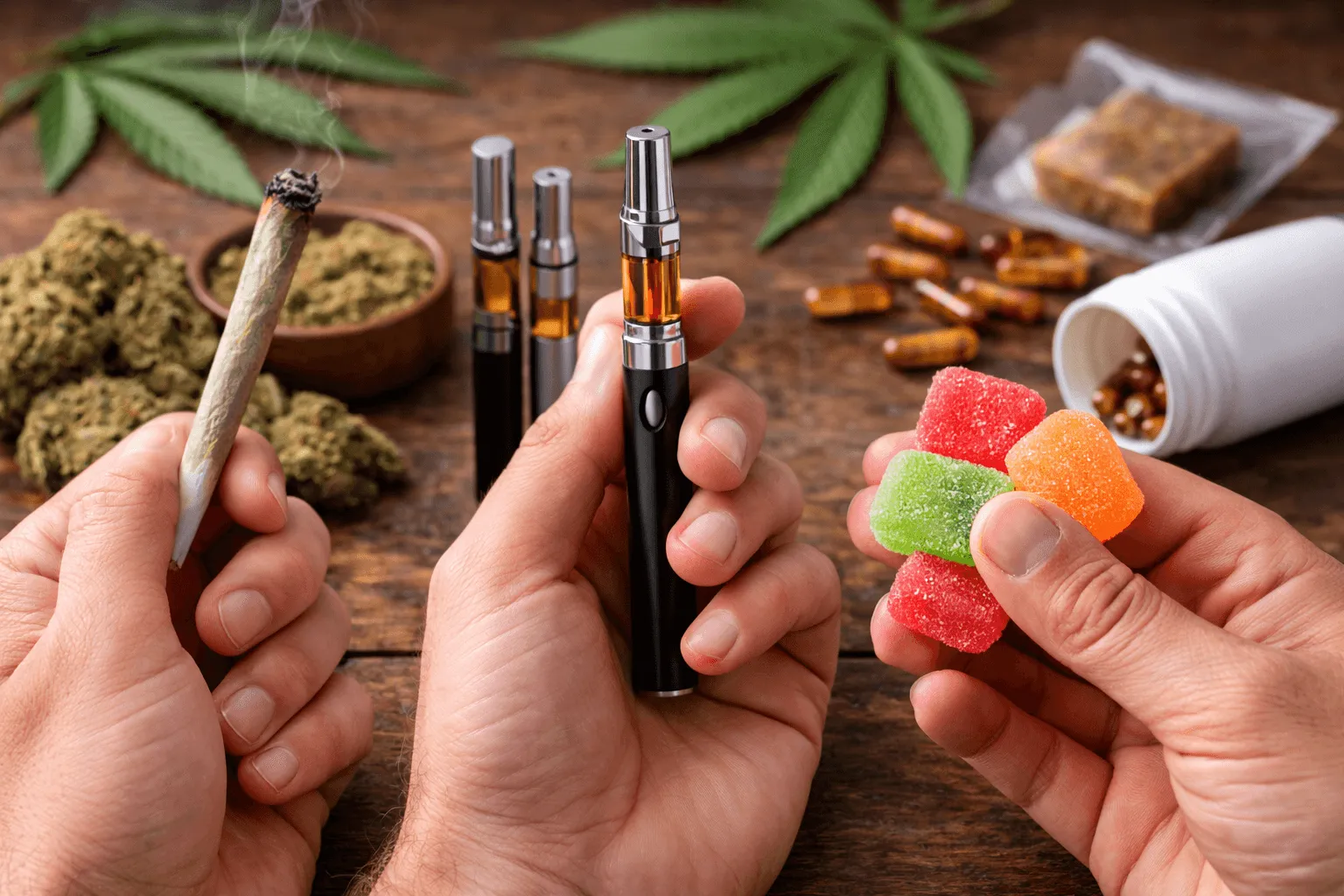
Dosage can feel confusing, especially if you’re trying a new product type or you haven’t used cannabis in a while. This guide covers dosage basics for Texas readers in a calm, practical way so you can start small, learn what your body does, and adjust without overdoing it.
- Start with a small amount and give it time to work before you add more.
- Track your dose, timing, and results so you can repeat what works.
- Use a slow step-up plan (microdosing style) instead of guessing.
Why do dosage basics matter more than people think?
Most “bad experiences” come from one of two things: taking too much too fast, or taking more before the first dose has fully kicked in. That’s why dosage basics is less about one “perfect number” and more about a repeatable system.
How to start low and go slow without feeling lost?
How to start low and go slow means you pick a small starting amount, wait long enough to feel the full effect, then adjust slowly over days—not minutes.
A basic approach:
- Choose one product format (don’t mix formats on day one).
- Start with the lowest suggested serving size.
- Wait the full onset time before deciding anything.
- Increase in small steps, not big jumps.
This approach is the foundation of dosage for beginners.
What’s a smart starting point for dosage for beginners?
There isn’t one universal number that fits everyone. Your tolerance, product type, and timing matter. For dosage for beginners, the safest move is to treat the first few uses like a “trial period.” Your goal is not maximum effect. Your goal is learning your baseline.
A simple first-time checklist
- Eat a light snack first (some people feel stronger effects on an empty stomach).
- Avoid alcohol on your first try.
- Don’t drive or make important plans.
- Keep water nearby.
- Write down what you took and when.
How long should you wait before taking more?
Waiting time depends on the product. This is where many people go wrong.
|
Product type |
Typical onset |
Why it matters |
|
Inhaled (flower/vape) |
minutes |
easy to stack quickly |
|
Sublingual/tincture |
15–45 min (varies) |
Effects can build slowly |
|
Edibles |
30–120+ min |
Delayed effects are common |
With edibles, “I don’t feel it yet” is not a signal to double up.
What is a microdosing guide, and when should you use it?
A microdosing guide is a plan for taking very small doses and slowly adjusting until you find the lowest amount that gives you the result you want. It reduces the risk of taking too much.
Try a microdosing guide if you’re sensitive, want mild effects, or are using edibles.
A simple 7-day microdosing guide
- Days 1–2: your lowest dose
- Days 3–4: small increase (one step up)
- Days 5–6: small increase (only if needed)
- Day 7: review notes and pick your steady dose
How do you adjust safely over time?
- Change one thing at a time (dose or product, not both).
- Increase in small steps.
- Stick with the same product for a few tries.
- Track your results.
Tracking template (copy/paste)
- Product type:
- Dose amount:
- Time taken:
- Time you noticed effects:
- Peak feeling (mild/medium/strong):
- Notes (food, mood, sleep, etc.):
This is dosage basics in real life: small steps, clear notes, repeat what works.
What are common mistakes to avoid?
- Mixing formats on the same day (edible + vape + flower)
- Taking more before the onset time is done
- Assuming “stronger” equals “better."
- Not reading the serving size on the label
- Trying a new product when you have to drive later
Also read: Flower, Vapes, or Edibles: Which One Fits Your Lifestyle?
FAQs: Dosage questions people ask
- Dosage basics: how do I choose a starting dose?
Start with the lowest labeled serving size, use one format, and track your results before you increase. - Dosage for beginners: how long should I wait before taking more?
Wait for the full onset time of your product type—especially with edibles, which can take much longer than inhaled products. - Microdosing guide: What is the safest way to increase my dose?
Increase in small steps every couple of days, not multiple times in one session, and change only one variable at a time. - How to start low and go slow: what does “low” mean?
“Low” means the smallest recommended serving and a dose you can repeat comfortably; if you feel anxious or foggy, you likely went too high. - Dosage basics: what should I track to find my best dose?
Track dose amount, time taken, onset time, peak intensity, and factors like food, stress, or sleep.
Final note
When you follow dosage basics, use a microdosing guide, and practice how to start low and go slow, your results become more predictable and less stressful. If you want education-first support, Natural Buds can help you compare options and choose a comfortable starting point.