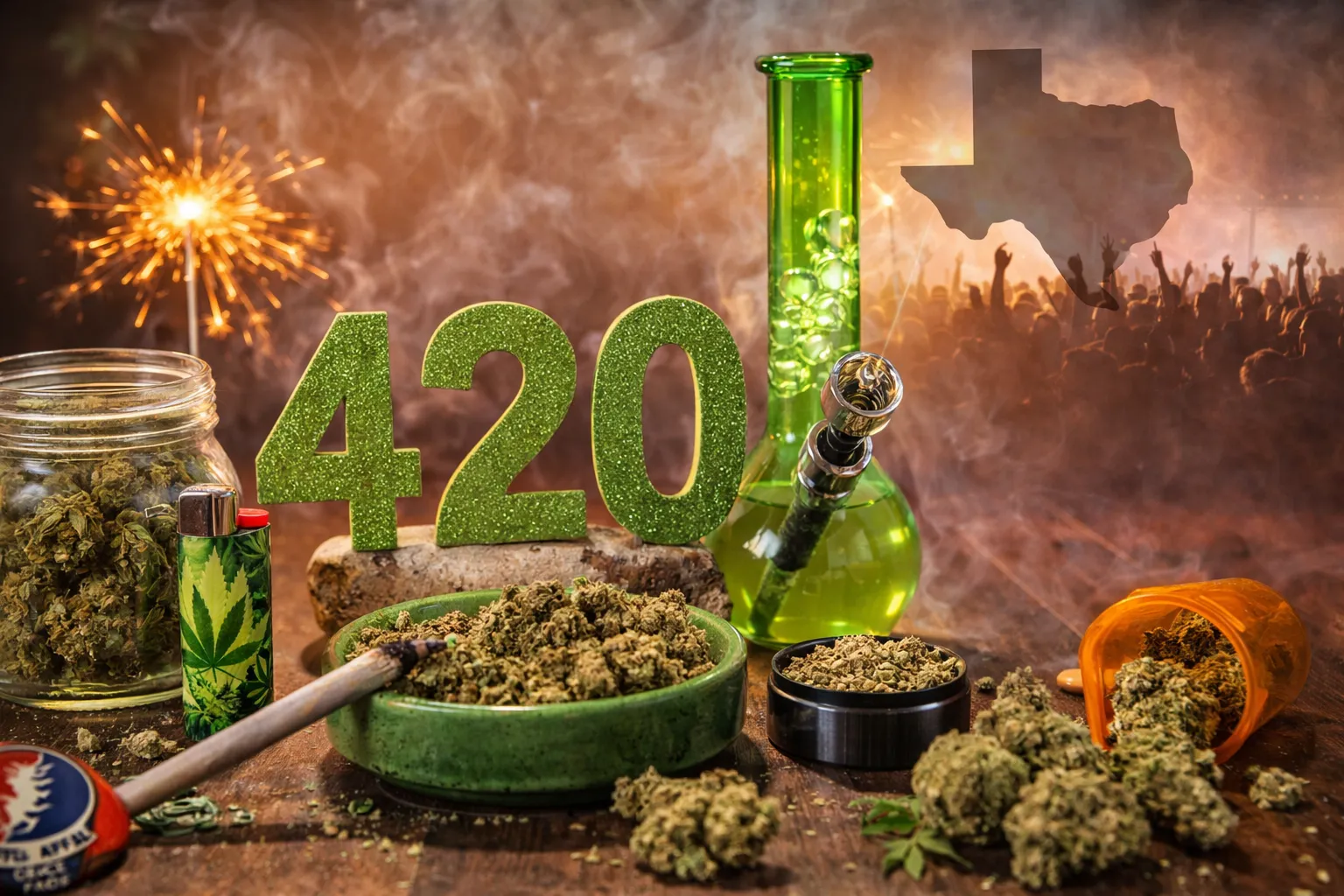
If you have ever wondered why cannabis consumers talk about “420,” you are not alone. The history of 420 is one of the most talked-about stories in cannabis culture, but it is also one of the most misunderstood. For some people, it is just shorthand for April 20. For others, it represents community, reform, shared identity, and the long cultural path cannabis has taken in places like Texas and across the country.
Key points
- The history of 420 traces back to a group of California teens in 1971, not a police code or random myth.
- Over time, 420 became a symbol of the cannabis community, advocacy, and shared culture.
- In Texas, 420 still matters because cannabis conversations continue to grow around access, education, and legal awareness.
What does 420 actually mean?
At the simplest level, “420” refers to cannabis use and cannabis culture, especially around 4:20 p.m. or April 20 (4/20).
Today, people use 420 in a few different ways:
- as slang for cannabis
- as a date for a cannabis-related celebration
- as a cultural reference point
- as a symbol of shared cannabis identity
That is why the history of 420 still gets attention every year. It is not just about a number. It became a kind of cultural shorthand.
If you have ever asked why 420 is celebrated, the short answer is this:
It grew from a private code into a public symbol of cannabis culture.
What is the real origin of 420?
The real origin of 420 is much more specific than most people think.
The most widely accepted story traces back to 1971 in San Rafael, California, where a group of high school friends called themselves the Waldos. According to the Associated Press and multiple follow-up reports, they used “420” as a code for meeting after school at 4:20 p.m. near a Louis Pasteur statue before heading out to look for an abandoned cannabis patch.
Over time, “420 Louis” got shortened to just “420.”
That’s the true origin of 420, and it has held up better than the many myths people still repeat online.
What are the biggest myths about the history of 420?
There are a lot of fake stories floating around. Some are funny. Some are just plain wrong.
Here are the most common myths:
Myth 1: 420 is a police code
It is not.
This is probably the most repeated false claim tied to the history of 420. News reports and long-standing cannabis history coverage have repeatedly debunked it.
Myth 2: 420 is the number of chemicals in cannabis
Also false.
Cannabis has many compounds, but “420” was not created from a chemical fact.
Myth 3: It has something to do with a law or penal code
Nope.
Some laws and bills have used the number later, but that came after the slang already existed.
This is why understanding the history of 420 matters. It clears up the myths and gives the culture more context.
How did 420 go from a school code to a cannabis holiday?
This is where the story gets more interesting.
The term did not stay local for long. According to the Associated Press, one of the Waldos had ties to the circle around the Grateful Dead, which helped the term spread through fans and the wider cannabis scene. Later, High Times helped popularize it even more in the early 1990s.
That is a big part of how 420 cannabis culture became national and then global.
What started as a private meetup time became:
- a slang term
- a social signal
- a date on the calendar
- a yearly cannabis celebration
That shift is the reason people still ask why 420 is celebrated every April.
Why is 420 celebrated every April 20?
April 20 became the unofficial cannabis holiday because the number “420” had already become widely recognized in cannabis circles.
Once that happened, 4/20 naturally turned into a symbolic date.
People now use April 20 to:
- celebrate cannabis culture
- gather socially
- support cannabis businesses
- reflect on reform and legalization
- share the history and meaning behind the day
So if you are wondering why 420 is celebrated, it is partly fun, partly tradition, and partly cultural memory.
It is one of the few cannabis-related dates that people across very different states and legal environments still recognize.
Why does the history of 420 still matter today?
Because cannabis culture did not appear out of nowhere.
The history of 420 still matters because it reminds people that cannabis has always been tied to:
- secrecy
- stigma
- community
- activism
- normalization
- legal change
That matters even more today, because the modern cannabis industry can sometimes make 420 look like it is only about promotions or product drops.
But the roots are deeper than that.
The broader 420 cannabis culture still reflects decades of people building a shared identity around something that was once heavily stigmatized.
What does 420 mean for cannabis culture now?
Today, 420 cannabis culture means different things to different people.
For some, it is still a laid-back social tradition. For others, it represents freedom, reform, education, or wellness.
What 420 often represents today
- Community
- Cannabis acceptance
- Shared rituals
- Consumer awareness
- Advocacy and reform
- Cultural identity
That range is part of why the history of 420 has lasted.
It stayed relevant because it was flexible enough to grow with the culture.
Why does 420 still matter in Texas?
Texas is one of the most interesting places to talk about cannabis culture because the legal environment is still limited and often confusing.
That means 420 in Texas often feels less like a giant public event and more like a cultural checkpoint.
People in Texas still use April 20 to:
- learn more about cannabis
- talk openly about the plant
- explore legal hemp and cannabinoid products
- reflect on changing public attitudes
That is one reason the history of 420 still matters here. It gives people a cultural frame, even in a state where laws have not moved as quickly as public interest.
How does Texas fit into modern 420 cannabis culture?
Texas has not fully legalized cannabis for adult use, but the cannabis conversation has clearly grown.
That growth can be seen in:
- hemp product demand
- interest in cannabinoids like CBD and THCa
- more consumer education
- wider public curiosity around cannabis culture
Texas also has a legal medical cannabis program, though it remains more limited than in many other states. The Texas Compassionate Use Program is overseen by the Texas Department of Public Safety and allows certain low-THC cannabis products for qualifying patients.
That is important context because it shows how 420 cannabis culture can still matter even where access is narrower.
Is 420 just about smoking?
No, and that is one of the biggest changes over time.
The early origin of 420 was tied to smoking, but today the culture around it is broader.
Now 420 can include:
- flower
- edibles
- vapes
- concentrates
- wellness products
- legal hemp-derived cannabinoids
- educational events
- advocacy conversations
That is one reason why 420 is celebrated in so many different ways now. The culture around cannabis has expanded.
What can cannabis consumers in Texas take from the history of 420?
A lot, actually.
The history of 420 is not just trivia. It gives cannabis consumers a useful perspective.
Here’s what it still teaches:
- Cannabis culture has always been community-driven
- Language and symbols matter
- Stigma can change over time
- Education matters as much as celebration
- Cannabis culture is bigger than one product or one state
That is especially useful in Texas, where many consumers are still learning how culture, legality, and consumer access fit together.
What should 420 mean going forward?
The best answer is probably this:
420 should keep meaning something.
Not just discounts. Not just hashtags. Not just memes.
A more useful version of 420 today includes:
- education
- legal awareness
- community
- thoughtful use
- consumer responsibility
- cultural respect
That does not mean it has to be overly serious. It just means the day still has roots worth remembering.
And that is really the point of understanding the history of 420 in the first place.
Quick timeline: how 420 became what it is today
| Year / Era | What Happened |
| 1971 | The Waldos began using “420” as a meetup code in California |
| 1970s–1980s | The term spread through social circles and music culture |
| Early 1990s | Cannabis media helped popularize “420” more widely |
| 2017 | Oxford English Dictionary added “420” as a recognized term |
| Today | 420 is widely used as a symbol of cannabis culture and the April 20 celebration |
The Oxford English Dictionary added the term in 2017, citing early evidence connected to the Waldos, which helped solidify the accepted origin of 420 in mainstream reference history.
Final thoughts
The meaning of 420 has changed over time, but it has not lost its relevance. What started as a code between a few teenagers became a symbol that still carries weight across generations of cannabis consumers. In Texas, that matters because cannabis culture is still evolving, and people are still figuring out what education, access, and community look like in a changing legal landscape. If you care about cannabis beyond the surface level, the history of 420 is worth understanding — and at Natural Buds, that cultural context still matters.
FAQ: History of 420
1. What is the real history of 420?
The real history of 420 traces back to a group of high school friends in California in 1971 who used “420” as a code for meeting after school.
2. What is the true origin of 420?
The accepted origin of 420 comes from the Waldos in San Rafael, California, who met at 4:20 p.m. to search for an abandoned cannabis patch.
3. Why is 420 celebrated every year?
If you are wondering why 420 is celebrated, it is because 420 became a widely recognized cannabis code that later turned April 20 into an unofficial cannabis holiday.
4. What does 420 cannabis culture mean today?
420 cannabis culture now represents the cannabis community, shared identity, reform history, social tradition, and modern consumer awareness.
5. Why does the history of 420 still matter in Texas?
The history of 420 still matters in Texas because cannabis conversations around legality, culture, and access are still growing, and 420 helps connect consumers to that bigger story.