If you are wondering how long do edibles take to kick in, standard THC edibles usually begin producing noticeable effects in about 30 minutes to 2 hours, but the full effect can take as long as 4 hours. Timing varies based on the product, formulation, dose, food intake, metabolism, and the person using it.
That delay is one of the biggest differences between edibles and inhaled cannabis. It is also why taking another serving too soon can lead to a much stronger experience than expected.
Quick Answer
- Standard gummies, chocolates, and baked edibles: often 30 minutes to 2 hours before effects begin.
- Full effects: may take up to 4 hours.
- Fast-acting edibles: some formulations absorb more quickly, but timing varies by product.
- Duration: edible effects can last several hours, and residual effects may continue longer.
- Safest approach: start low, wait long enough, and do not assume an edible failed simply because nothing happened in the first hour.
For a broader introduction to choosing between product formats, Natural Buds’ flower, vapes, and edibles guide explains how different cannabis products can fit different preferences and situations.
Why Do Edibles Take So Long to Kick In?
If you have ever asked why do edibles take so long to kick in, the answer comes down largely to digestion and liver metabolism.
When cannabis is smoked or vaped, cannabinoids move through the lungs and into the bloodstream quickly.
Edibles take a slower route:
Eat edible → Digestive system → Liver → Bloodstream → Brain and body
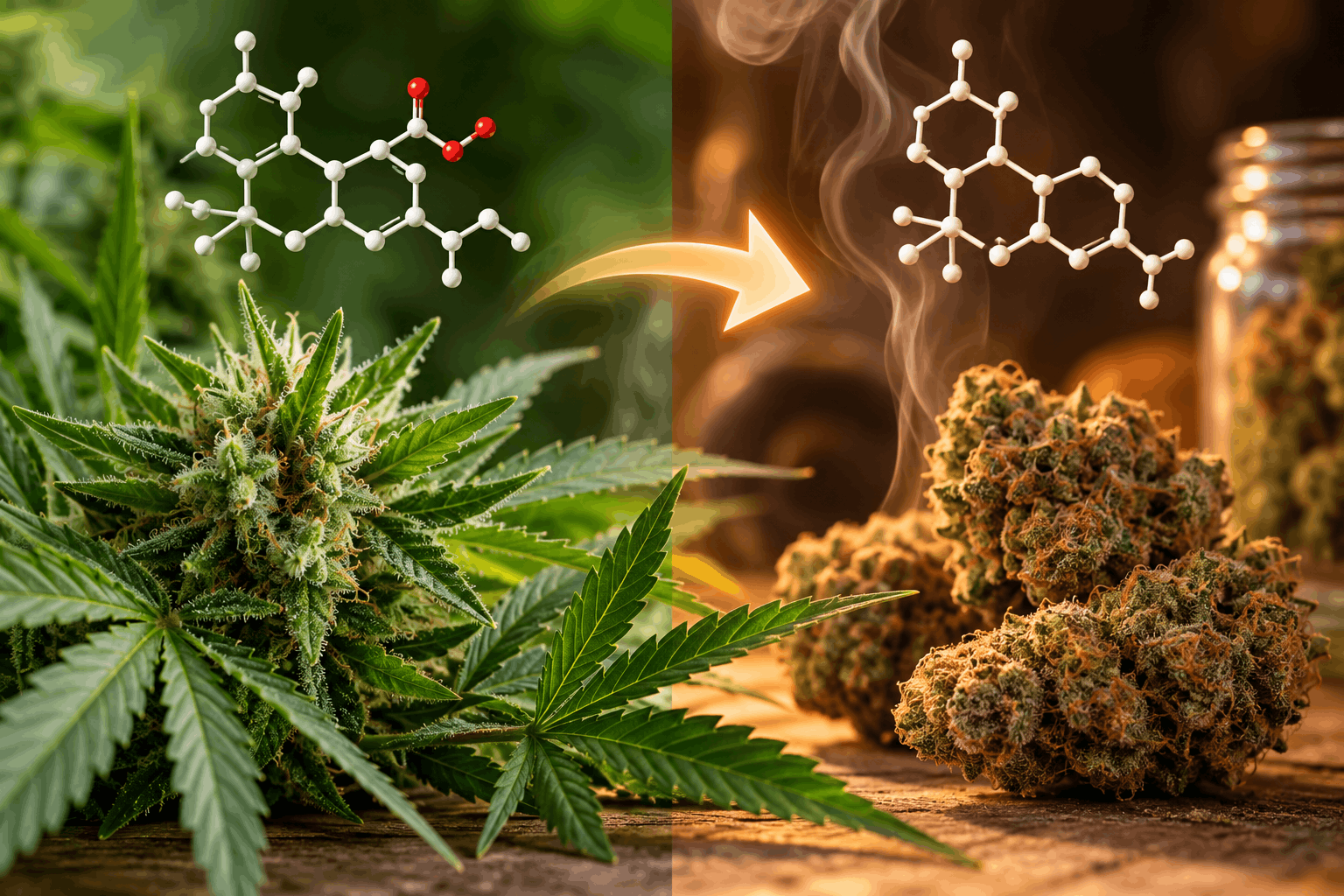
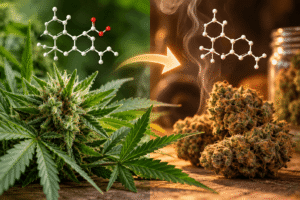
During that process, the liver converts some Delta-9 THC into an active metabolite called 11-hydroxy-THC.
Health Canada notes that ingested THC is converted into 11-hydroxy-THC and that oral cannabis takes longer to absorb than inhaled cannabis.
That is why an edible can seem inactive at first and then feel much stronger later.
For more background on Delta-9 THC and related cannabin oid chemistry, see Natural Buds’ guide to THCa vs Delta-9.
Edible Timing by Product Type
Not every edible behaves the same way.
Product Type | Typical Timing | Important Note |
Gummies | Often 30 min–2 hours | Full effects may take longer |
Chocolates | Often 30 min–2 hours | Food and fat content may affect absorption |
Baked goods | Often 30 min–2 hours | Dose may be spread across multiple servings |
Capsules / softgels | Similar to swallowed edibles | Must pass through digestion |
THC beverages | Can vary widely | Some are designed for faster absorption |
Fast-acting edibles | Potentially faster | Formulation matters; do not assume every product is rapid |
These are broad ranges rather than guarantees.
CDC states that cannabis edibles may take 30 minutes to 2 hours before intoxicating effects are felt. Health Canada advises that full effects can take up to 4 hours.
How Long Do Gummies Take to Kick In?
Traditional THC gummies generally follow the same timing as other standard edibles.
You may begin noticing effects within:
30 minutes to 2 hours
but the experience can continue building beyond that point.
A controlled study of oral cannabis found that subjective effects generally did not appear until around 30–60 minutes, with peak effects occurring later.
That is why using the first hour as a test of whether a gummy “worked” can be misleading.
The common mistake
A person takes one gummy.
After 45 minutes:
I don’t feel anything.
They take another.
Later, both servings begin contributing to the experience.
This is one of the most common ways people unintentionally consume more THC than planned.
Natural Buds’ dosage basics guide explains the general start-low-and-adjust-slow approach in more detail.
How Long Do Fast-Acting Edibles Take to Kick In?
The question how long do fast acting edibles take to kick in has become more important as newer formulations enter the market.
Some fast-acting products use technologies such as:
- Microencapsulation
- Emulsification
- Nanoemulsion-style delivery systems
These approaches are designed to change how cannabinoids disperse and are absorbed.
A 2026 randomized controlled trial involving 20 adults compared a fast-acting THC edible with a standard edible. THC-related blood concentrations reached their peak significantly faster with the fast-acting formulation, with the fast-acting product reaching peak concentration at about 30 minutes, around 30 minutes earlier than the standard edible.
That does not mean every fast-acting edible will make every person feel effects at exactly 30 minutes.
The study measured pharmacokinetics—what happened to cannabinoids in the blood—not a universal consumer onset time.
So when a package says “fast acting,” treat the manufacturer’s directions as product-specific information rather than assuming all fast-acting products behave identically.
Why Does Timing Vary From Person to Person?
Two people can consume the same product and have different experiences.
Several factors may influence onset and intensity.
1. Food in Your Stomach
Whether you recently ate can affect oral cannabis absorption.
CDC notes that edible effects can vary based partly on whether cannabis is consumed on an empty stomach.
A large meal may change the speed and pattern of absorption compared with taking an edible without food.
2. Product Formulation
A gummy, beverage, baked product, and fast-acting formulation do not necessarily release cannabinoids in the same way.
Research comparing commercial edible products has found differences in THC concentrations during early absorption, even when products contained the same labeled THC dose.
3. Individual Metabolism
People process drugs differently.
Body composition, liver metabolism, digestive speed, medications, and other biological differences may contribute to variation.
There is no reliable way to calculate an exact edible onset time from body weight alone.
4. THC Amount
A higher dose does not necessarily make the edible start dramatically faster, but it can make the eventual effects stronger and potentially more difficult to manage.
Health Canada advises that higher THC levels increase impairment and the chance of adverse effects.
5. Cannabis Experience
Someone who uses THC frequently may perceive a given dose differently from a new consumer.
Tolerance affects how strong the effects feel, although it does not create a reliable shortcut for predicting exact onset time.
When Do Edibles Reach Their Strongest Effects?
Feeling the first effect is not the same as reaching the peak.
A person may notice subtle changes at 45 minutes, but the intensity can continue increasing.
Health Canada advises that ingested cannabis may take up to 4 hours to reach full effects.
That distinction is important:
Onset: when you first notice something.
Peak/full effect: when the experience is closer to its strongest point.
This is why waiting only until the first mild effect before taking more can still lead to overconsumption.
How Long Do Edibles Last?
Edibles generally last longer than inhaled cannabis.
Health Canada reports that acute effects from cannabis that is eaten or drunk may last up to about 12 hours, while some residual effects can continue for up to 24 hours.
Duration can vary considerably based on:
- THC amount
- Product type
- Individual metabolism
- Tolerance
- Other substances
- Food intake
Do not use a fixed clock time as proof that you are no longer impaired.
Should You Take More if You Don’t Feel Anything?
Not quickly.
One of the safest habits with edibles is patience.
Health Canada specifically warns that consuming more before the full effects are known can increase the risk of adverse effects.
A useful principle is:
Do not mistake delayed onset for a weak product.
Natural Buds’ guide on how to use cannabis safely covers additional harm-reduction considerations for both newer and experienced consumers.
What If an Edible Becomes Too Strong?
Taking too much THC can cause an uncomfortable or, in some cases, medically significant reaction.
Possible signs of excessive THC exposure can include:
- Panic
- Anxiety
- Paranoia
- Extreme confusion
- Rapid heart rate
- Hallucinations
- Severe nausea or vomiting
CDC states that fatal overdose from cannabis alone is unlikely, but excessive cannabis use can still cause serious reactions, injury, and poisoning.
If someone has severe symptoms, loses consciousness, has trouble breathing, experiences a seizure, or cannot be awakened normally, seek emergency medical care.
For mild overconsumption, Natural Buds also has a guide on what to do if you feel too high.
Edibles vs. Smoking and Vaping: Why Timing Feels So Different
Inhaled cannabis generally produces noticeable effects much faster than edibles.
Method | Onset Pattern |
Smoking | Seconds to minutes |
Vaping | Seconds to minutes |
Standard edible | About 30 min–2 hours |
Full edible effect | Can take up to 4 hours |
Fast-acting edible | May be faster, depending on formulation |
Health Canada notes that smoked or vaporized cannabis can produce effects within seconds to minutes, while oral products take significantly longer.
That difference changes how people should approach each product.
With inhalation, effects provide relatively rapid feedback.
With edibles, the feedback loop is delayed.
That delay requires more patience.
How to Read an Edible Label Before Using It
Before consuming an edible, check the packaging carefully.
Look for:
- THC amount per serving
- THC amount per piece
- Total THC in the package
- Number of servings
- Product directions
- Whether it is marketed as fast acting
- Other cannabinoids such as CBD
Do not assume:
1 package = 1 serving
and do not assume:
1 gummy = the same strength across every brand
Understanding the label is one of the easiest ways to reduce accidental overconsumption.
Store Edibles Carefully
Edibles can look similar to ordinary candy, cookies, chocolate, or beverages.
That makes storage especially important.
Keep them:
- In their original packaging
- Clearly separated from regular food
- Away from children
- Away from pets
- Stored according to product directions
Health authorities specifically warn that edible cannabis products can be mistaken for ordinary food, particularly by children.
For more practical storage information, see Natural Buds’ wellness product storage guide.
FAQ
How long do edibles take to kick in?
Most standard cannabis edibles begin producing noticeable effects within about 30 minutes to 2 hours. Full effects may take up to 4 hours.
Why do edibles take so long to kick in?
Edibles must pass through digestion and liver metabolism before THC reaches the bloodstream in significant amounts. The liver also converts some THC into the active metabolite 11-hydroxy-THC.
How long do fast acting edibles take to kick in?
Fast-acting formulations may absorb more rapidly than standard edibles. A small 2026 trial found one fast-acting formulation reached peak blood cannabinoid levels around 30 minutes, but onset varies by product and person.
Can an edible take more than two hours to work?
Yes. Some people may not feel the full effect until several hours after consumption. Health Canada advises that full effects can take up to four hours.
Should I take another edible after one hour?
Taking more after only one hour may be too soon because the original dose may still be building. Waiting for the full effects reduces the risk of accidentally consuming too much.
How long do edible effects last?
Effects may last several hours. Health Canada notes acute effects may continue for up to 12 hours, with residual effects potentially lasting up to 24 hours.
Do gummies and chocolates kick in at the same time?
They often fall within the same general onset range, but formulation, ingredients, food intake, and individual metabolism can cause differences.
Final Takeaway
Understanding how long do edibles take to kick in is mostly about understanding that oral THC does not provide immediate feedback.
Standard edibles may begin working within 30 minutes to 2 hours, while the full effect can take up to 4 hours. Fast-acting formulations may absorb more quickly, but there is no universal onset time that applies to every product or person.
The safest approach is to read the label, start with a lower amount, allow enough time before considering more, and avoid driving or other risky activities while impaired.
For adults exploring hemp and cannabinoid products in Fort Worth, Natural Buds focuses on product education, clear labeling information, and helping customers understand differences between formats so they can make more informed choices.