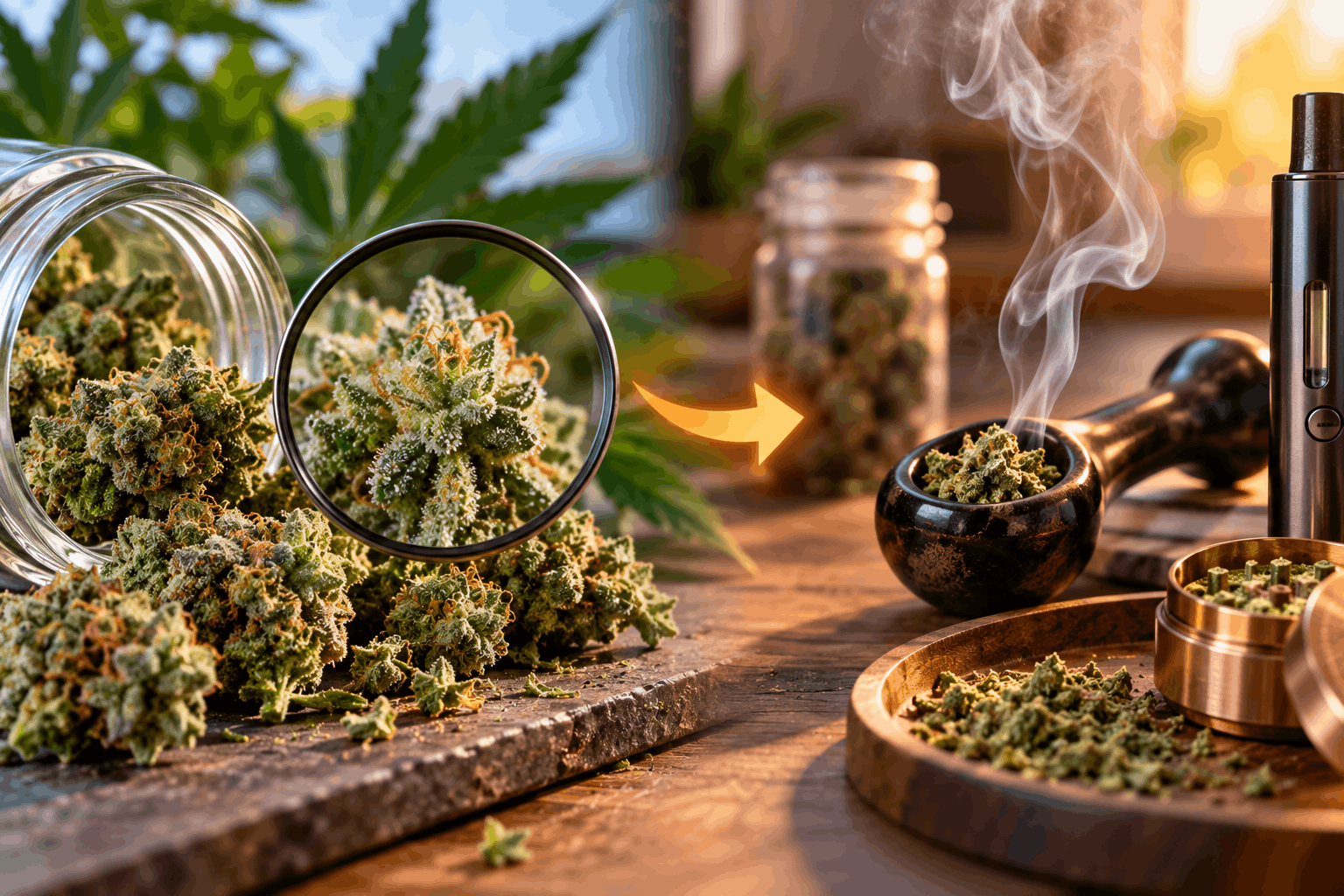
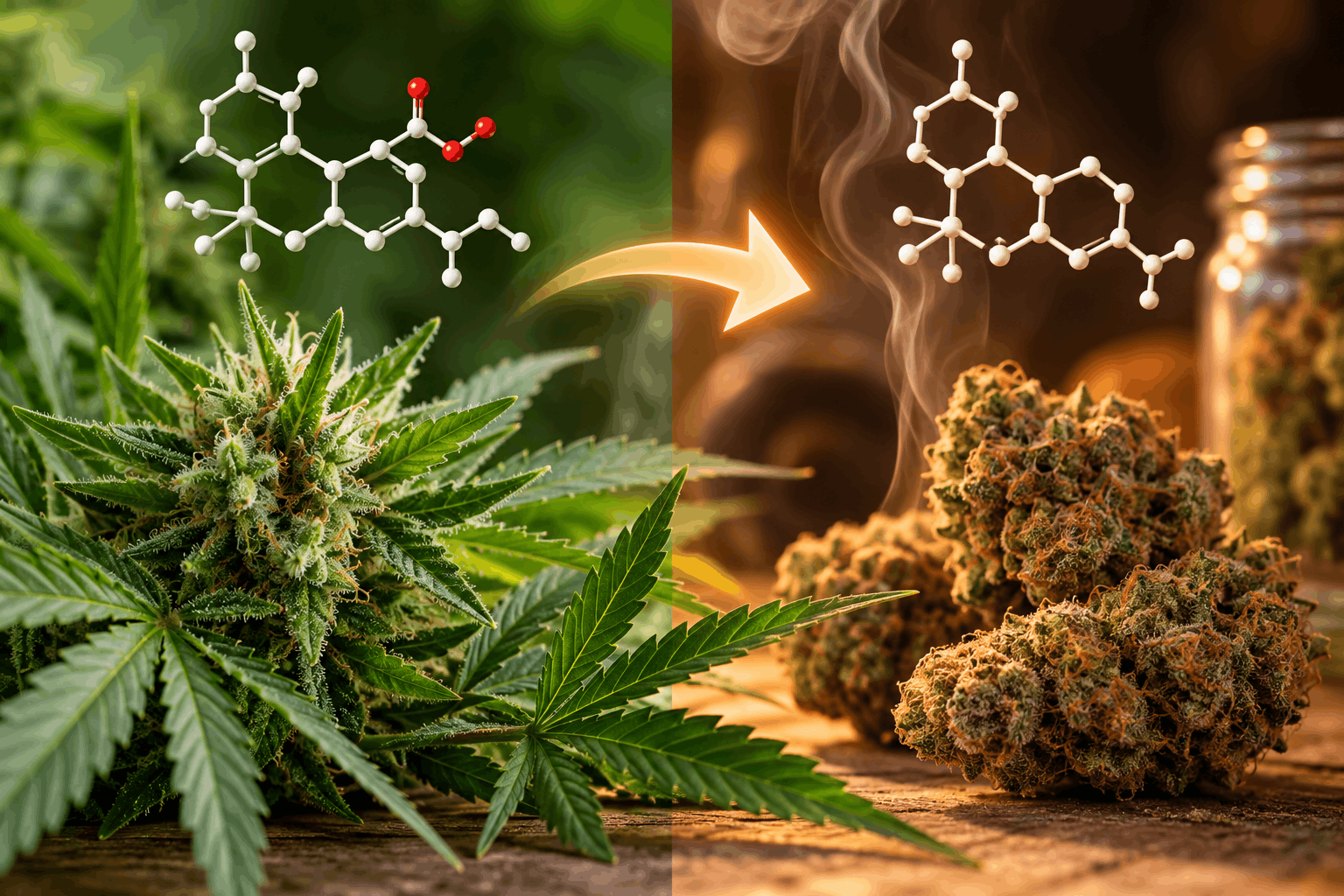
THCa is the acidic precursor to Delta-9 THC and is generally non-intoxicating in raw form. When heated through smoking, vaping, or baking, THCa undergoes decarboxylation and converts into psychoactive Delta-9 THC.
Understanding thca vs delta 9 starts with one key difference: THCa is the raw acidic precursor, while Delta-9 THC is the cannabinoid responsible for the familiar cannabis high.
If you want a deeper introduction to THCa flower itself, our guide to what THCa flower is and whether it is legal in Texas explains how THCa products are commonly classified and sold.
Quick Summary
- THCa is the raw acidic form; Delta-9 THC is the active intoxicating form.
- Raw THCa is generally non-intoxicating, while Delta-9 THC can produce a high.
- Heating THCa converts part of it into Delta-9 THC.
- Federal and state legal treatment can differ, so current local law matters.
Is THCa the Same as Delta 9?
No. If you are asking if THCa is the same as Delta-9, they are closely related but chemically different.
THCa, or tetrahydrocannabinolic acid, contains an extra carboxylic acid group. Delta-9 THC does not.
That structural difference affects how strongly each compound interacts with cannabinoid receptors, especially CB1 receptors in the nervous system.
Raw THCa has much weaker CB1 activity than Delta-9 THC, which is why THCa is generally not associated with the classic cannabis high before heating.
For broader context on how legal hemp differs from cannabis, read our hemp vs cannabis guide.
Does THCa Get You High?
Raw THCa generally does not produce the same intoxicating effect as Delta-9 THC.
However, the answer to does THCa get you high changes once heat is involved.
Smoking, vaping, or baking THCa-rich cannabis causes decarboxylation, converting part of the THCa into Delta-9 THC.
So:
- Raw THCa: generally non-intoxicating
- Heated THCa: can become intoxicating after conversion to Delta-9 THC
If you want a full explanation focused specifically on flower, see our guide answering does THCa flower get you high.
How Does THCa Convert Into Delta 9?
Decarboxylation is the process that turns THCa into Delta-9 THC.
Heat removes part of the THCa molecule as carbon dioxide, producing THC.
The conversion depends on:
- Temperature
- Heating time
- Product composition
- Processing method
Higher temperatures speed up the reaction, but too much heat can also degrade cannabinoids.
Heat and storage conditions can also affect cannabis and hemp products over time. Our guide to how light, heat, and humidity affect hemp quality explains why storage conditions matter.
THCa Conversion to Delta 9 Formula
The standard THCa conversion to delta 9 formula is:
Total THC = Delta-9 THC + (THCa × 0.877)
The 0.877 factor accounts for the molecular-weight loss that occurs when THCa loses carbon dioxide during decarboxylation.
Example
If a COA shows:
- THCa: 28%
- Delta-9 THC: 1.2%
Then:
28 × 0.877 = 24.556
24.556 + 1.2 = 25.756% Total THC
Rounded:
Total THC ≈ 25.76%
THCa vs Delta 9 Potency
THCa vs delta 9 potency should not be compared by simply looking at the raw percentages on a label.
A product with 25% THCa does not already contain 25% active Delta-9 THC.
Using the conversion factor:
25 × 0.877 = 21.925%
If the same product also contains 1% Delta-9 THC:
21.925 + 1 = 22.925% potential Total THC
Actual effects can still vary because conversion may be incomplete and individual response differs.
If you are unfamiliar with higher-potency cannabis products, review these dosage basics for starting low and adjusting safely before using a new product.
THCa vs Delta 9 Comparison
Feature | THCa | Delta-9 THC |
Full Name | Tetrahydrocannabinolic acid | Delta-9-tetrahydrocannabinol |
Natural State | Common in raw cannabis | Increases after decarboxylation |
Intoxicating? | Generally no in raw form | Yes |
CB1 Activity | Much weaker | Stronger |
Heat Needed? | Yes, for conversion | No |
Drug-Test Risk | Can be significant after heating/use | High |
Legal Status | Depends on federal and state rules | More directly regulated |
Is THCa Legal Under Federal Law?
The legal answer is changing in 2026.
Federal hemp law has historically focused on Delta-9 THC concentration, but production and testing rules can also account for Total THC.
That means THCa products should not automatically be assumed legal simply because their measured Delta-9 THC is low.
State rules can also be stricter and may regulate:
- Total THC
- THCa flower
- Intoxicating hemp products
- Age limits
- Retail channels
For Texas-specific context, our analysis of THCa and Delta-9 trends in Texas explains how these products fit into the changing local hemp market.
Is THCa Legal in All 50 States?
No.
Some states:
- Use Total THC rules
- Restrict THCa flower
- Regulate intoxicating hemp products
- Impose age or retail restrictions
- Treat certain THCa products similarly to marijuana
Always check the current law where the product is being sold or used.
For readers focused on Texas, you can also explore Texas consumable hemp license statistics for more context on the regulated hemp market.
Will THCa Show Up on a Drug Test?
It can.
When THCa is heated and converted into Delta-9 THC, the body produces THC metabolites that standard cannabis drug tests may detect.
A product being labeled THCa does not mean it is automatically safe from drug-testing risk.
If drug testing matters to you, do not assume a hemp or THCa label guarantees a negative result.
What Should You Check on a THCa or Delta 9 COA?
A Certificate of Analysis can help you verify what is actually in the product.
Look for:
- THCa percentage
- Delta-9 THC percentage
- Total THC
- Batch or lot number
- Testing laboratory
- Test date
- Contaminant results
- Other cannabinoids
- Terpenes where reported
You can also calculate Total THC yourself using:
Total THC = Delta-9 THC + (THCa × 0.877)
Cannabis products can contain more than just THC and THCa. If you want to understand compounds such as CBG, CBN, CBC, and other cannabinoids, read our guide to minor cannabinoids and their roles.
How Should You Use THCa or Delta 9 More Responsibly?
Potency and individual tolerance can vary widely.
A few basic safety practices include:
- Start with a small amount when trying a new product.
- Give yourself time before consuming more.
- Check cannabinoid levels before use.
- Avoid driving or operating machinery while impaired.
- Keep products away from children and pets.
- Follow applicable state and local laws.
For a more complete overview, see our cannabis safety tips for new and experienced users.
Frequently Asked Questions
Is THCa as strong as Delta 9 when smoked?
It can be strong because heating converts THCa into Delta-9 THC. Final effects depend on starting THCa levels, existing Delta-9 THC, conversion efficiency, dose, and individual tolerance.
Does THCa get you high?
Raw THCa is generally non-intoxicating. When heated, it can convert into Delta-9 THC and produce intoxicating effects.
Is THCa the same as Delta 9?
No. THCa is the acidic precursor to Delta-9 THC. Heat converts THCa toward Delta-9 through decarboxylation.
Is THCa legal in all 50 states?
No. State laws vary, and some states regulate Total THC or intoxicating hemp products more strictly.
What is the THCa conversion to Delta 9 formula?
Use:
Total THC = Delta-9 THC + (THCa × 0.877)
Will THCa show up on a drug test?
It can. Heated THCa converts into Delta-9 THC, and the body can produce THC metabolites detected in cannabis drug tests.
Final Takeaway
The easiest way to understand THCa vs delta 9 is to focus on chemistry and heat.
THCa is the acidic precursor commonly found in raw cannabis. Delta-9 THC is the intoxicating form. When THCa is heated, decarboxylation converts part of it into Delta-9 THC.
For potency, use the THCa conversion to delta 9 formula:
Total THC = Delta-9 THC + (THCa × 0.877)
For legal questions, check both federal and state rules because THCa treatment can vary by jurisdiction.
If you are comparing products, review the COA, understand Total THC, know your tolerance, and consider how the product will actually be consumed. Natural Buds also covers related topics such as THCa flower pricing across Texas cities for consumers who want to compare product cost as well as cannabinoid content.