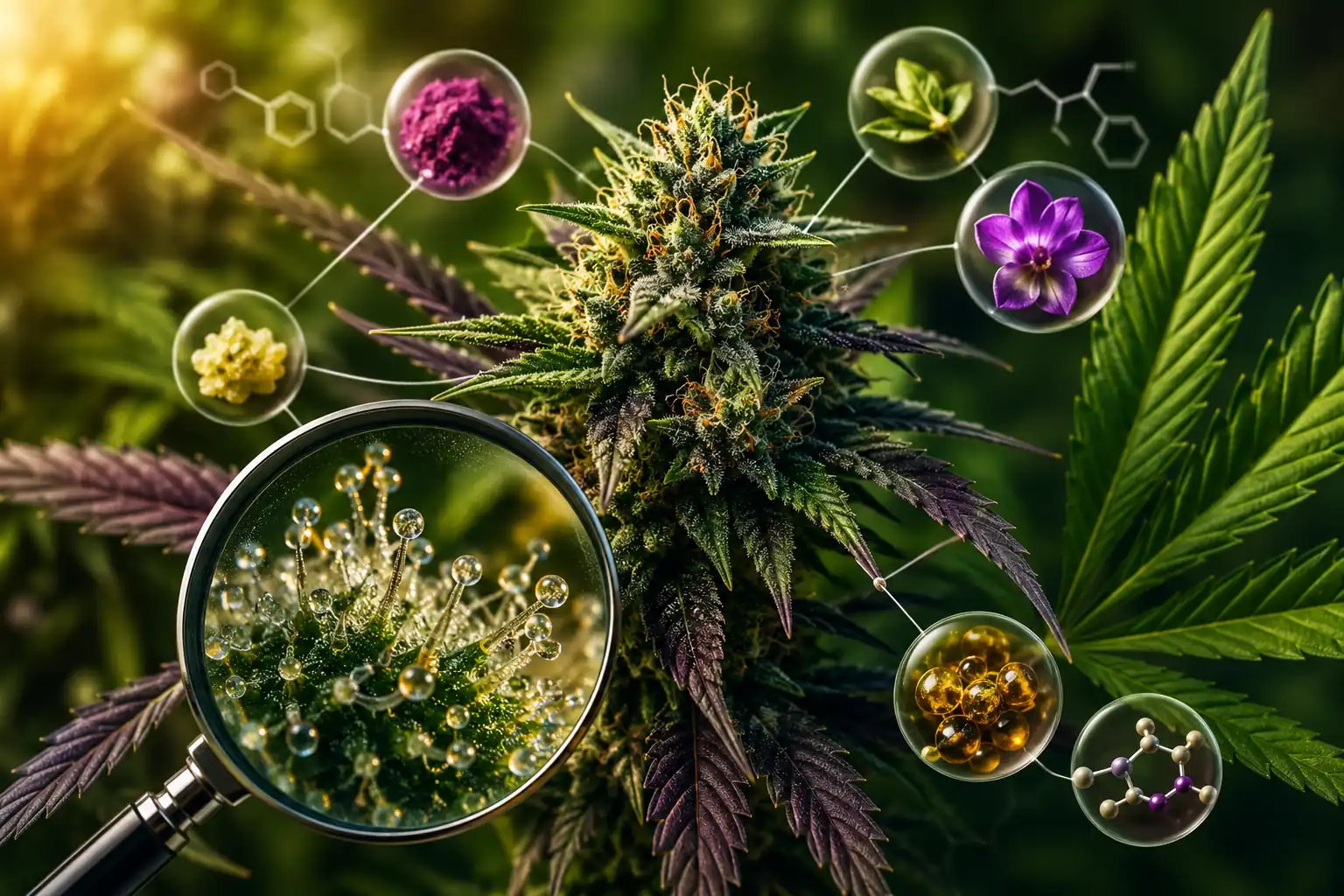
If you’ve noticed purple, green, or golden hues in cannabis flower, you’ve seen the effects of flavonoids. These natural plant compounds help influence color, aroma, and flavor.
Researchers are also studying how flavonoids interact with cannabinoids and terpenes. For consumers in Fort Worth, TX, understanding flavonoids can offer a better look at what makes different cannabis varieties unique.
What You Should Know
- cannabis flavonoids are natural plant pigments that contribute to color, aroma, and the overall chemical profile of cannabis.
- These compounds work alongside cannabinoids and terpenes through complex interactions often called the entourage effect.
- Learning about flavonoids helps consumers better understand cannabis quality beyond THC percentage alone.
What are cannabis flavonoids?
Flavonoids are natural plant compounds found in fruits, vegetables, herbs, flowers, and cannabis. They help plants respond to environmental stress and attract pollinators. In cannabis, they make up a small part of its chemical profile but contribute to its color, appearance, and overall chemistry.
These flavonoids in cannabis are part of a larger family of cannabis compounds that include:
- Cannabinoids
- Terpenes
- Flavonoids
- Phenolic compounds
- Essential oils
Together, these cannabis compounds create each cultivar’s unique characteristics.
Why do flavonoids in cannabis matter?
Many people focus only on THC percentages. However, researchers increasingly recognize that cannabis contains dozens of biologically active compounds working together.
Flavonoids may influence:
- Flower coloration
- Aroma complexity
- Flavor profile
- Plant defense mechanisms
- UV protection
- Antioxidant activity
Although research into human health benefits is ongoing, laboratory studies suggest several flavonoids possess antioxidant and anti-inflammatory properties. More clinical studies are still needed before firm conclusions can be made.
How do plant pigments affect cannabis appearance?
One of the easiest ways to recognize plant pigments is by looking at colorful cannabis flowers.
| Pigment | Common Color | Purpose |
| Chlorophyll | Green | Photosynthesis |
| Anthocyanins | Purple, blue, red | UV protection and stress response |
| Carotenoids | Yellow and orange | Light absorption |
| Flavonoids | Multiple shades | Protection and chemical diversity |
Growing conditions can influence how these plant pigments appear. Factors include:
- Temperature
- Sunlight exposure
- Genetics
- Soil nutrients
- Plant maturity
This is why genetically identical plants may display slightly different colors.
Which flavonoids are unique to cannabis?
Scientists have identified several flavonoids found almost exclusively in cannabis.
Some of the best-known include:
Cannflavin A
Cannflavin A has attracted research attention because laboratory studies suggest it may possess anti-inflammatory activity. Human studies remain limited.
Cannflavin B
Closely related to Cannflavin A, this compound is also under investigation for potential biological activity.
Cannflavin C
This newer member of the family continues to be studied as researchers better understand cannabis chemistry.
These specialized flavonoids in cannabis help distinguish cannabis from many other flowering plants.
How do cannabis compounds work together?
Cannabis is much more than THC or CBD.
Researchers often discuss the entourage effect, which describes the possibility that multiple cannabis compounds interact to produce effects that differ from isolated compounds alone.
These compounds include:
- Cannabinoids
- Terpenes
- Flavonoids
- Minor cannabinoids
- Aromatic molecules
Although more human research is needed, many scientists believe the overall chemical profile provides a more complete picture than cannabinoid content alone.
Why are plant pigments important for cannabis plants?
Plants cannot move away from danger.
Instead, they produce protective chemicals.
These plant pigments help cannabis respond to environmental challenges by:
- Absorbing ultraviolet light
- Protecting cells from oxidative stress
- Discouraging insects
- Supporting reproduction
- Responding to changing temperatures
Without these natural compounds, cannabis plants would struggle to adapt to environmental conditions.
Can cannabis flavonoids affect aroma and flavor?
Yes—but usually indirectly.
Most cannabis aromas come from terpenes. However, cannabis flavonoids can subtly contribute to flavor complexity.
Consumers often describe premium flower as having notes of:
- Citrus
- Earth
- Pine
- Lavender
- Berries
- Herbs
- Spice
These flavor experiences result from interactions among flavonoids in cannabis, terpenes, cannabinoids, and other naturally occurring cannabis compounds.
What does current research say?
Research into cannabis chemistry is continuing to grow. Scientists have identified more than 100 cannabinoids, hundreds of terpenes, and several flavonoids in the plant.
Studies have also shown that cannflavins and other flavonoids have interesting properties in laboratory research, but more human studies are needed to understand their potential effects.
Overall, research is still developing, so many questions about cannabis flavonoids remain unanswered.
How can you identify quality flowers beyond THC?
Many shoppers assume higher THC always means better cannabis.
In reality, experienced consumers often evaluate several characteristics.
Look for:
- Strong natural aroma
- Rich color from healthy plant pigments
- Dense trichome coverage
- Proper curing
- Balanced cannabinoid profile
- Diverse terpene profile
- Healthy flavonoid content reflected in vibrant appearance
Quality comes from the complete profile of cannabis compounds, not one number.
Why should consumers in Fort Worth care about cannabis science?
As cannabis education continues to improve, consumers increasingly ask smarter questions.
Instead of asking only:
- How much THC does it have?
Many now ask:
- What terpenes are present?
- Which cannabinoids dominate?
- How was it cultivated?
- What flavonoids in cannabis contribute to its characteristics?
This broader understanding helps shoppers appreciate why two flowers with identical THC percentages may produce noticeably different experiences.
Are flavonoids found outside cannabis?
Absolutely.
Many everyday foods contain beneficial flavonoids.
Examples include:
| Food | Major Flavonoids |
| Blueberries | Anthocyanins |
| Apples | Quercetin |
| Onions | Kaempferol |
| Green tea | Catechins |
| Citrus fruits | Hesperidin |
| Dark chocolate | Flavanols |
These plant pigments help explain why colorful fruits and vegetables are commonly associated with healthy diets.
What myths exist about cannabis flavonoids?
Myth 1: Flavonoids create the psychoactive effects
False.
THC is primarily responsible for psychoactive effects.
Myth 2: Purple flower always means stronger cannabis
False.
Purple coloration comes largely from plant pigments like anthocyanins and genetics—not potency.
Myth 3: THC percentage tells the whole story
False.
Today’s research increasingly emphasizes the importance of complete cannabis compounds working together.
Myth 4: Flavonoids are only cosmetic
False.
Although they contribute to color, they also play important biological roles within the plant.
How is flavonoid research changing the cannabis industry?
Breeders and cultivators increasingly look beyond cannabinoid percentages.
Modern cultivation may focus on:
- Enhanced terpene production
- Richer flavonoids in cannabis
- Improved cannabinoid balance
- Better preservation during curing
- More complete chemical profiles
This trend supports consumers seeking premium flowers with exceptional aroma, appearance, and overall quality.
Conclusion
Understanding cannabis flavonoids helps you see cannabis through a much wider lens. These natural compounds do far more than create beautiful colors. They contribute to aroma, flavor, plant protection, and the overall complexity that makes every cannabis variety unique. As research continues, scientists will likely uncover even more about how flavonoids in cannabis interact with cannabinoids, terpenes, and other cannabis compounds.
For consumers in Fort Worth who want to make more informed choices, learning about the complete chemistry of cannabis offers a better way to evaluate quality than relying on THC percentage alone. Whether you’re new to cannabis or expanding your knowledge, education remains one of the best tools for choosing products that match your preferences. At the same time, Natural buds believes informed consumers are empowered consumers, making science an important part of every cannabis conversation.
Frequently Asked Questions
1. What are cannabis flavonoids?
Cannabis flavonoids are natural plant compounds that contribute to the color, flavor, aroma, and chemical complexity of cannabis. They also help protect the plant from environmental stress.
2. How do flavonoids in cannabis differ from terpenes?
Flavonoids mainly contribute to pigmentation and some aspects of flavor, while terpenes are responsible for most of the plant’s aroma. Both belong to the broader family of cannabis compounds.
3. Are plant pigments responsible for purple cannabis?
Yes. Purple, blue, and red shades often come from plant pigments called anthocyanins, influenced by genetics and environmental conditions.
4. Do cannabis flavonoids make you feel high?
No. Flavonoids are not psychoactive. THC is the primary compound responsible for intoxicating effects.
5. Why should I care about cannabis compounds instead of only THC?
A full spectrum of cannabis compounds, including cannabinoids, terpenes, and flavonoids, contributes to the plant’s overall characteristics. Looking beyond THC provides a more complete understanding of cannabis quality.