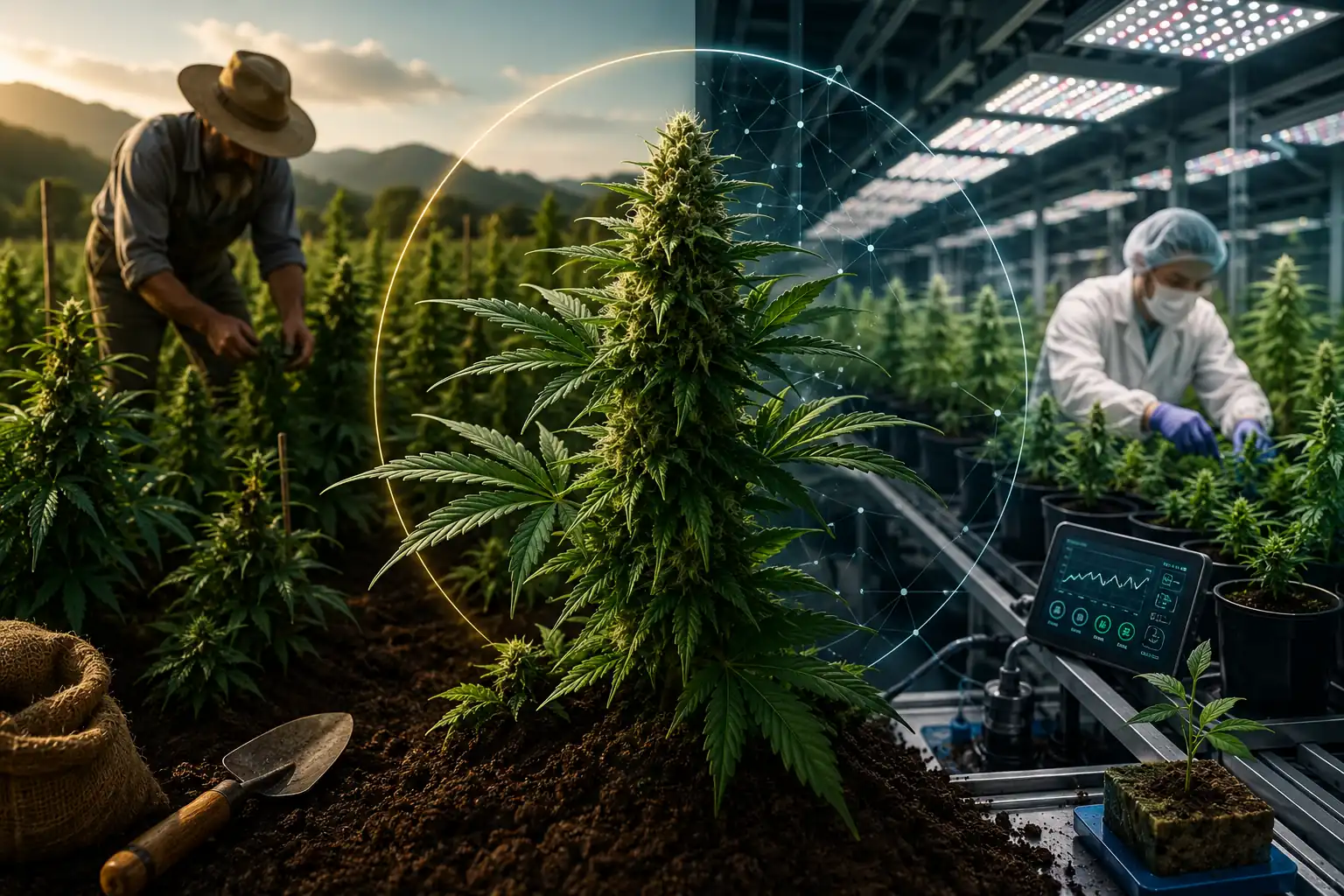
Cannabis has been grown for thousands of years, but the way people cultivate it has changed dramatically. Early growers relied on seasonal weather, healthy soil, and simple farming knowledge. Today, growers use advanced technology, data-driven systems, and sustainable practices to produce consistent, high-quality plants. These improvements have made cultivation more efficient while helping reduce waste and environmental impact.
If you have ever wondered how today’s cannabis is grown compared to the past, you’re not alone. Understanding Cannabis Cultivation Techniques gives you a better picture of how the industry has evolved and why modern growers continue to invest in better farming practices. Whether you’re a curious consumer, a beginner, or someone interested in the cannabis industry in Fort Worth, TX, learning about these changes helps you appreciate the work behind every harvest.
Quick Summery:
- Traditional cannabis farming relied on natural seasons, while modern cultivation combines technology with proven agricultural practices.
- Modern Cannabis Farming improves consistency, efficiency, and sustainability without replacing the importance of experienced growers.
- Cannabis Innovation and improved Growing Methods continue to shape how cannabis is cultivated for today’s market.
What are Cannabis Cultivation Techniques?
Cannabis cultivation techniques are the methods growers use to care for plants from seed to harvest. Modern practices combine traditional knowledge with technology to improve plant health, quality, and consistency.
Common techniques include:
- Selecting quality genetics
- Managing soil, nutrients, and water
- Controlling light, temperature, and humidity
- Managing pests and diseases
- Harvesting at the right time
- Proper drying and curing
Each step can influence the quality of the final product.
How was cannabis cultivated in the early days?
Early cannabis cultivation relied on simple, natural farming practices. Growers worked with local weather, fertile soil, and seasonal conditions to raise healthy plants.
Common methods included:
- Outdoor seasonal growing
- Natural sunlight
- Rainwater or basic irrigation
- Hand planting and harvesting
- Organic soil materials
- Natural pest control
These traditional methods helped shape the cultivation practices used today.
Why did Cannabis Cultivation Techniques begin to change?
As demand increased, growers needed more reliable ways to produce consistent harvests. Weather alone could no longer meet production goals, especially in regions with changing climates.
Several factors encouraged new cultivation practices:
- Growing consumer demand
- Better agricultural research
- Advances in lighting technology
- Improved irrigation systems
- Greater focus on product consistency
- Environmental sustainability
Instead of replacing traditional farming knowledge, new technologies built upon it.
Today, Cannabis Innovation allows growers to monitor plant health more closely while reducing unnecessary waste.
How has indoor cultivation changed the industry?
One of the biggest milestones in cannabis history was the introduction of controlled indoor cultivation.
Instead of depending entirely on seasonal weather, growers could create ideal growing conditions throughout the year.
Indoor cultivation allows precise control over:
| Growing Factor | Traditional Outdoor Growing | Indoor Cultivation |
| Light | Seasonal sunlight | Adjustable LED lighting |
| Temperature | Weather dependent | Climate controlled |
| Humidity | Natural conditions | Controlled environment |
| Pest Exposure | Higher | Lower |
| Harvest Schedule | Seasonal | Year-round |
This shift transformed Modern Cannabis Farming by giving growers greater control over every stage of plant development.
Indoor facilities also make it easier to maintain consistent quality between harvests.
How do greenhouse systems combine old and new Growing Methods?
Greenhouse cultivation combines natural sunlight with modern environmental controls, offering a balance between outdoor and indoor growing.
Key benefits include:
- Lower energy use
- Better temperature control
- Weather protection
- Improved water efficiency
- Longer growing seasons
These methods can support more consistent production while reducing resource use.
What role does technology play in Modern Cannabis Farming?
Technology helps growers monitor plants, manage resources, and maintain more consistent growing conditions. Modern systems can track temperature, humidity, soil moisture, light, and water use.
Key technologies include:
- Smart sensors for real-time monitoring
- Automated irrigation to reduce water waste
- LED lighting for better energy efficiency
- Environmental controls for stable growing conditions
How Does Cannabis Innovation Improve Sustainability?
Modern cultivation also focuses on reducing environmental impact through:
- Water recycling and rainwater collection
- Energy-efficient lighting
- Organic soil practices
- Integrated pest management
- Composting and reduced fertilizer waste
Together, these innovations can improve efficiency while supporting more sustainable cultivation practices.
How has Cannabis Innovation improved sustainability?
Sustainability has become an important goal across agriculture, including cannabis cultivation.
Modern growers increasingly look for ways to reduce environmental impact without sacrificing plant quality.
Some of today’s sustainable practices include:
- Water recycling systems
- Rainwater collection
- Organic soil improvement
- Integrated pest management
- Energy-efficient lighting
- Reduced fertilizer waste
- Composting plant materials
These practices show how Cannabis Innovation supports both productivity and environmental responsibility.
According to the United States Department of Agriculture (USDA), efficient irrigation and precision agriculture help reduce water use while improving crop management. Similarly, the U.S. Environmental Protection Agency (EPA) encourages energy-efficient technologies and sustainable farming practices to lower environmental impacts across agricultural industries.
In many regions, including Fort Worth, TX, sustainability has become an important conversation as agricultural businesses explore ways to conserve resources while maintaining reliable production.
How are growing methods continuing to evolve?
The cannabis industry continues to improve as growers learn more about plant science and agricultural technology. Rather than relying on one approach, many cultivation facilities combine traditional knowledge with modern tools to achieve better results.
Successful growers understand that every cultivation environment is different. Factors such as climate, available space, water quality, and local regulations all influence how plants are grown. Because of this, there is no single method that works for everyone.
Today’s Growing Methods focus on four key goals:
- Producing healthy, consistent plants
- Reducing environmental impact
- Improving efficiency
- Maintaining product quality
As research continues, growers are finding new ways to meet these goals while using fewer natural resources.
Data helps growers make better decisions
Modern cultivation relies more on information than ever before. Instead of guessing when plants need water or nutrients, growers can use sensors and monitoring software to track plant conditions throughout the growing cycle.
Data may include:
- Soil moisture levels
- Root zone temperature
- Air circulation
- Light intensity
- Nutrient levels
- Plant growth patterns
This information allows growers to respond quickly if conditions change, helping reduce plant stress and improve harvest consistency.
Why is genetics becoming more important?
While cultivation techniques matter, genetics also play a major role in how cannabis plants grow.
Growers carefully select genetics based on characteristics such as:
- Disease resistance
- Growth speed
- Yield potential
- Climate adaptability
- Plant structure
- Desired cannabinoid and terpene profiles
Modern breeding programs have become an important part of Cannabis Innovation because they help produce plants that perform better under different cultivation conditions.
When quality genetics are paired with effective Cannabis Cultivation Techniques, growers have a stronger foundation for producing reliable harvests.
How do sustainable practices benefit growers and consumers?
Sustainability is no longer just a trend. It has become a practical business strategy.
Many cultivation facilities are investing in environmentally responsible practices because they can lower operating costs while conserving natural resources.
Some examples include:
- Recycling irrigation water
- Installing energy-efficient LED lighting
- Using renewable energy where possible
- Improving insulation in indoor facilities
- Composting organic plant material
- Reducing unnecessary packaging
These improvements support Modern Cannabis Farming by helping growers operate more efficiently while reducing waste.
Consumers also benefit because sustainable cultivation often emphasizes better resource management and long-term environmental responsibility.
How do outdoor, greenhouse, and indoor cultivation compare?
Each cultivation method has advantages depending on the grower’s goals.
| Feature | Outdor | Greenhouse | Indoor |
| Sunlight | Natural | Mostly natural | Artificial LED lighting |
| Climate Control | Limited | Moderate | Full control |
| Production Cost | Lower | Moderate | Higher |
| Weather Risk | High | Moderate | Low |
| Harvest Schedule | Seasonl | Extended seasons | Year-round |
| Energy Use | Lowest | Moderate | Highest |
Rather than competing against one another, these Growing Methods serve different purposes across the cannabis industry.
What does the future of Cannabis Cultivation Techniques look like?
The future of Cannabis Cultivation Techniques will likely focus on improving efficiency, consistency, and sustainability.
Emerging technologies may include:
- Artificial intelligence for crop monitoring
- Automated nutrient management
- Advanced environmental sensors
- Robotics for repetitive cultivation tasks
- Improved water recycling systems
- More energy-efficient cultivation facilities
At the same time, experienced growers will continue to rely on practical knowledge developed over many years. Technology can support decision-making, but successful cultivation still depends on careful observation and attention to plant health.
As Cannabis Innovation continues, growers are expected to combine scientific research with traditional farming experience to produce better results while protecting natural resources.
What does this mean for Fort Worth, TX?
As cannabis education grows across the country, many people in Fort Worth, TX are becoming more interested in how cannabis is cultivated and how farming practices have changed over time.
Learning about Modern Cannabis Farming helps consumers understand the work involved in producing quality cannabis products. It also highlights the industry’s growing focus on sustainability, responsible cultivation, and continuous improvement.
Whether cannabis is grown outdoors, inside advanced indoor facilities, or in climate-controlled greenhouses, modern cultivation reflects decades of agricultural progress and ongoing research.
Key milestones in cannabis cultivation
| Time Period | Major Development | Industry Impact |
| Ancient cultivation | Outdoor seasonal farming | Established basic cultivation practices |
| Early agricultural improvements | Better soil management and seed selection | Improved plant health |
| Greenhouse adoption | Environmental protection | Longer growing seasons |
| Indoor cultivation | Climate-controlled environments | Consistent year-round production |
| LED technology | Energy-efficient lighting | Lower operating costs |
| Smart farming | Sensors and automation | Better monitoring and resource efficiency |
Key facts about cannabis cultivation
- Agriculture has relied on irrigation for thousands of years, and precision irrigation is now improving water efficiency across many crops.
- LED lighting uses significantly less energy than many traditional grow lights while producing less heat.
- Environmental monitoring systems help growers detect changes before plants become stressed.
- Sustainable farming practices continue to gain importance across agriculture as businesses look to conserve water and energy.
- Research into plant genetics continues to improve crop consistency and disease resistance.
Sources: United States Department of Agriculture (USDA), U.S. Environmental Protection Agency (EPA), Food and Agriculture Organization of the United Nations (FAO), and peer-reviewed agricultural research.
Conclusion
The journey from traditional farming to today’s advanced cultivation systems shows just how much the cannabis industry has evolved. Early growers relied on natural conditions and hands-on experience, while modern cultivators combine that knowledge with technology, sustainability, and scientific research. Together, these improvements have created safer, more efficient, and more reliable cultivation practices.
As the industry continues to grow, Cannabis Cultivation Techniques will keep evolving through better research, smarter technology, and environmentally responsible farming. Understanding these changes gives consumers a deeper appreciation for the care involved in producing quality cannabis products. Whether you’re learning about cannabis for the first time or simply exploring how cultivation has progressed, staying informed helps you make better decisions. To learn more about cannabis education and products, visit Natural Buds, where knowledge and responsible cannabis awareness continue to support the community.
Frequently Asked Questions
1. What are Cannabis Cultivation Techniques?
Cannabis Cultivation Techniques are the farming methods used to grow healthy cannabis plants. They include soil preparation, irrigation, lighting, climate control, nutrient management, pest prevention, harvesting, and curing.
2. How has Modern Cannabis Farming changed over the years?
Modern Cannabis Farming has introduced climate-controlled facilities, LED lighting, automated irrigation, environmental monitoring, and sustainable practices that improve consistency, efficiency, and product quality.
3. What role does Cannabis Innovation play in cultivation?
Cannabis Innovation helps growers improve plant health through better genetics, precision agriculture, smart monitoring systems, energy-efficient equipment, and sustainable farming practices.
4. Which Growing Methods are most commonly used today?
The most common Growing Methods include outdoor cultivation, greenhouse growing, and indoor cultivation. Each offers different advantages depending on climate, production goals, and available resources.
5. Why is sustainability important in cannabis cultivation?
Sustainable cultivation helps conserve water, reduce energy use, minimize waste, and improve long-term farming practices while supporting efficient production and environmental responsibility.