Live rosin vs live resin mainly comes down to extraction method. Both typically begin with fresh-frozen cannabis, but live resin uses solvents such as butane or propane, while live rosin is made without hydrocarbon solvents, usually by washing fresh-frozen cannabis into hash and pressing that hash with heat and pressure. Live resin is generally easier to find and often costs less, while live rosin appeals to shoppers who specifically want a solventless concentrate. Neither is automatically stronger, safer, or more flavorful—the cultivar, producer, freshness, storage, and individual batch also matter.
Quick Answer
- Live resin: Fresh-frozen cannabis extracted using hydrocarbons such as butane or propane.
- Live rosin: Fresh-frozen cannabis processed mechanically without chemical solvents.
- Which is better? Neither is universally better. The choice depends on budget, processing preference, availability, flavor, and the individual product.
Key Takeaways
- “Live” means the flower was flash frozen immediately after harvest instead of dried and cured, which locks in a terpene profile much closer to the original plant.
- Live resin is made using hydrocarbon solvents such as butane or propane, while live rosin is made through a purely mechanical, solventless process involving ice water and heat pressed extraction.
- Live resin tends to be more affordable and widely available, especially in vape cartridges, while live rosin commands a premium price due to labor intensive processing and lower yields.
What Does Live Mean in Cannabis Extracts?
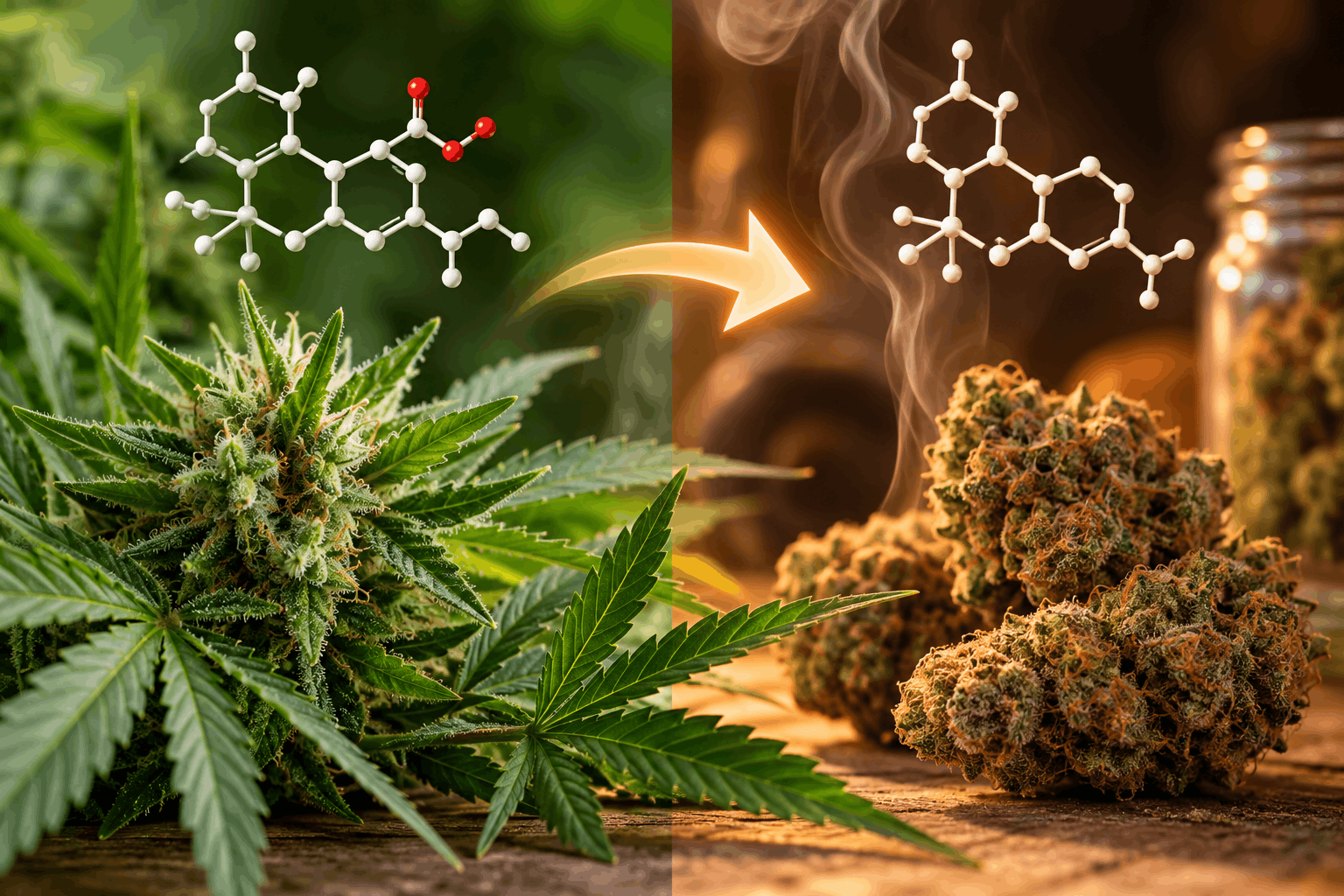
The word “live” refers to cannabis that is flash frozen at the moment of harvest rather than dried and cured through the traditional weeks-long process.
When flower is cut and hung to dry, a large percentage of its volatile terpenes evaporate before extraction ever begins. Monoterpenes, the lightest and most aromatic compounds responsible for the bright, citrusy, or piney smell of fresh cannabis, are especially fragile and break down quickly once exposed to heat, light, and air. Traditional curing also converts some cannabinoids and allows chlorophyll and other plant compounds to degrade the flavor profile over time.
Live extraction sidesteps this loss entirely. Growers harvest the plant and, within a matter of hours, plunge it into subzero storage, typically around negative 40 degrees Fahrenheit. This flash freezing halts enzymatic activity and preserves the plant’s chemical fingerprint almost exactly as it existed at harvest. The frozen biomass is then processed directly, whether through solvents or purely mechanical means, which is why both live resin and live rosin are prized for terpene-rich, true to plant flavor that dried flower extracts simply cannot replicate.
Rosin vs Live Rosin: What’s the Difference?
The difference between rosin and live rosin is primarily the starting material.
Regular rosin can be pressed from dried and cured flower, kief, or hash. Live rosin is generally made from material that was frozen fresh rather than dried and cured, commonly by washing the fresh-frozen cannabis into bubble hash and then pressing the hash.
|
Comparison |
Rosin |
Live Rosin |
|
Starting material |
Usually dried/cured flower, kief, or hash |
Fresh-frozen cannabis, commonly processed into hash |
|
Solventless |
Yes |
Yes |
|
Heat and pressure used |
Yes |
Yes |
|
“Live” material |
No |
Yes |
|
Typical reason shoppers choose it |
Solventless concentrate |
Solventless concentrate with fresh-frozen starting material |
Does Live Rosin Have Better Flavor Than Rosin?
Not automatically.
Using fresh-frozen material can help preserve volatile aromatic compounds that may otherwise change or diminish during drying and curing. However, final flavor also depends on genetics, harvest quality, washing and pressing technique, storage, age, and how the concentrate is consumed.
A well-made cured rosin can therefore taste better than a poorly produced or poorly stored live rosin. “Live” describes the starting material; it is not a guarantee of quality.
Understanding Live Resin: Solvents and Speed
What Is Live Resin?
Live resin is a cannabis concentrate produced by running flash frozen cannabis through a hydrocarbon solvent system, most commonly butane or propane, to strip cannabinoids and terpenes from the plant material.
The frozen biomass is packed into a closed loop extraction vessel where the liquefied solvent washes over it, dissolving trichomes rich in THC, CBD, and aromatic compounds. The resulting solution is then purged of solvent through a combination of vacuum pressure and controlled heat, a process that can take anywhere from several hours to multiple days depending on the desired consistency. Licensed producers test every batch to confirm residual solvent levels fall well under state mandated safety thresholds before the product ever reaches a dispensary shelf.
Because the process relies on solvents that efficiently extract volatile compounds, live resin producers have a high degree of control over texture, consistency, and cannabinoid concentration, which is part of why it has become the dominant concentrate category by volume across most legal markets.
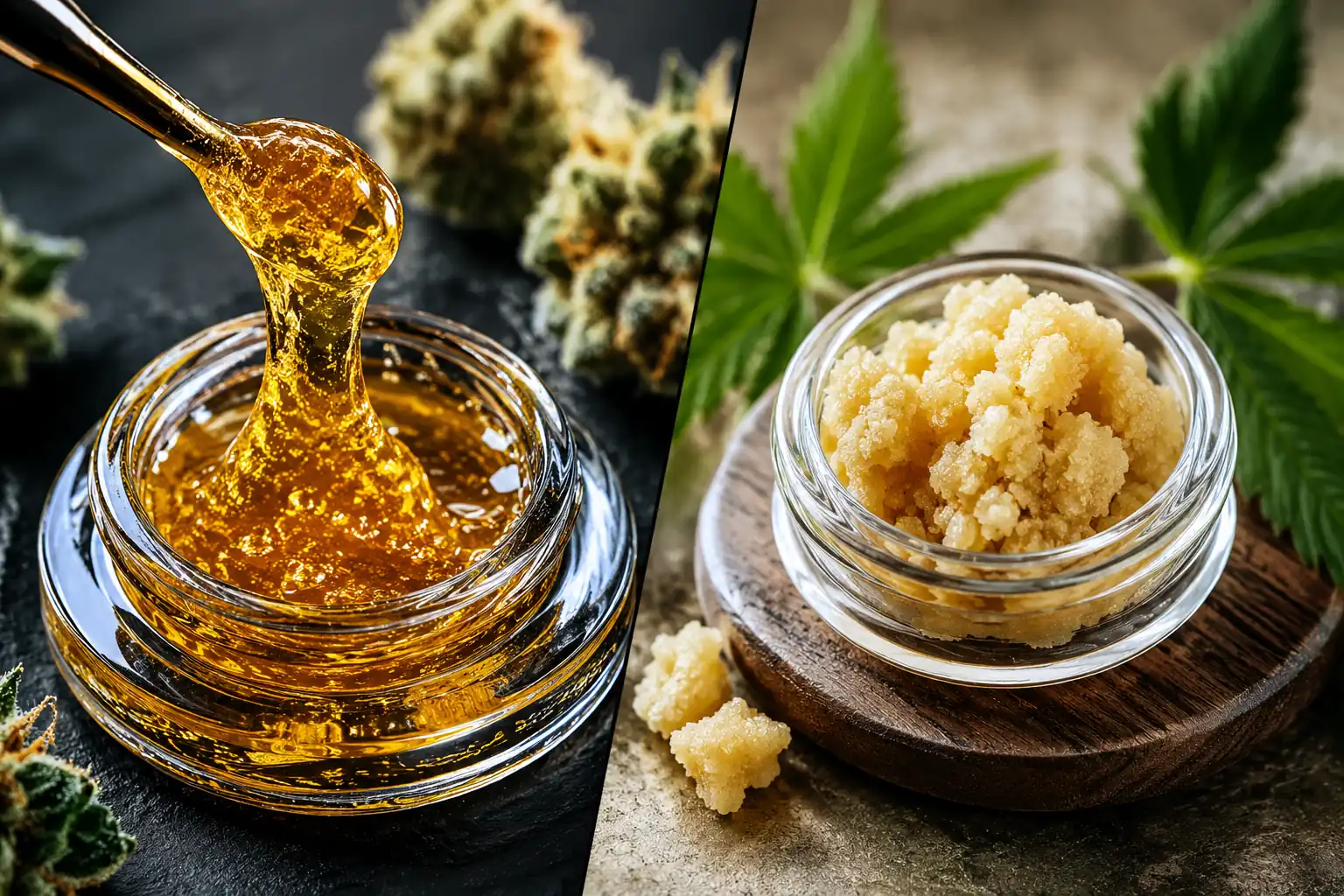
Common Live Resin Textures
Live resin producers can manipulate temperature, agitation, and purging time to create a range of distinct textures, including:
- Sauce: A liquid terpene layer surrounding crystallized THCA diamonds, prized for its intense aroma and dabbing experience.
- Sugar: A grainy, crumbly texture that sits between sauce and badder, offering a balance of flavor and ease of handling.
- Diamonds: Nearly pure crystalline THCA structures, often sold alongside a separate terpene sauce for potency focused consumers.
- Vape Oil: A refined, often distillate blended oil used in cartridges, valued for convenience and consistent dosing.
Understanding Live Rosin: The Solventless Artisan Standard
What Is Live Rosin?
Live rosin is a cannabis concentrate made entirely without chemical solvents, relying instead on ice water, physical agitation, fine mesh filtration, and heat combined with pressure to separate trichomes from flash frozen flower.
The process begins with an ice water wash: frozen flower is agitated in near freezing water, causing the fragile trichome heads to snap off the plant material through mechanical shock rather than chemical dissolution. This slurry is then passed through a graduated series of mesh wash bags, often ranging from roughly 220 microns down to 25 microns or finer, isolating the cleanest, most resinous trichome heads into what is called bubble hash or “wet hash.” That wet hash is then placed between parchment paper inside a hydraulic press fitted with heated plates. Controlled heat, often in the range of 160 to 200 degrees Fahrenheit, combined with slowly ramping pressure, melts the trichomes and pushes out a golden oil, leaving behind spent plant fiber.
Because no solvent ever touches the material, live rosin is often described as the closest thing to a mechanically pressed version of the living plant, and it commands respect among connoisseurs precisely because nothing but ice, water, screens, heat, and pressure ever enters the equation.
Common Live Rosin Textures
Rosin artisans manipulate whip time, temperature, and curing conditions to produce a range of textures, including:
- Cold Cure: Rosin whipped at low temperatures over an extended period, resulting in a light, opaque, cake batter like consistency prized for smoothness.
- Badder: A creamy, whipped texture achieved through moderate heat and consistent agitation, easy to handle on a dab tool.
- Jam: A syrupy, glossy texture with visible terpene separation, often associated with strains particularly rich in aromatic oils.
- Fresh Press: Rosin enjoyed immediately after pressing, before curing, offering a raw and intensely aromatic experience.
Live Rosin vs Live Resin: What Are the Main Differences?
The live rosin vs live resin comparison comes down primarily to extraction method, price, availability, and consumer preference. Both start with fresh-frozen cannabis, but live resin relies on hydrocarbon extraction while live rosin uses mechanical separation and pressing. Potency, terpene content, texture, and flavor can vary significantly by cultivar, batch, producer, and laboratory results, so the extraction method alone should not be used to predict which product will be stronger.
| Category | Live Resin | Live Rosin |
| Extraction Method | Hydrocarbon solvent extraction from flash-frozen biomass | Solventless mechanical extraction using ice water and heat-pressed plates |
| Solvents Used | Butane and/or propane | None; purely mechanical separation |
| Average Price Point | Usually less expensive | Usually commands a premium |
| Terpene Preservation | High, though some volatile terpenes can be lost during solvent purging | Very high; often considered the truest representation of the fresh plant |
| THC Potency Range | Varies significantly by product and batch | Varies significantly by product and batch |
| Ideal User | Budget-conscious consumers and vape cartridge users seeking convenience | Connoisseurs and purists prioritizing flavor, purity, and solventless products |
The Core Differences Explained
Extraction Method and Solvent Use
The fundamental split between these two concentrates comes down to chemistry versus mechanics.
Live resin relies on chemical solvent extraction, using butane or propane to dissolve trichomes away from plant fiber, followed by a purging phase to remove that solvent. Live rosin does not use hydrocarbon extraction solvents. It relies on mechanical separation, commonly involving ice water, filtration, heat, and pressure. It’s worth addressing consumer safety directly here: in every legal, licensed market, live resin sold at a dispensary has been tested by an independent lab and purged of residual solvents to levels far below the threshold considered safe for inhalation. The “chemical” origin of live resin does not mean the finished product contains meaningful solvent residue when purchased through regulated channels.
Which Has Better Flavor: Live Rosin or Live Resin?
There is no universal winner for flavor.
Both products begin with fresh-frozen cannabis, which is why both are associated with strong aroma and terpene-focused profiles. Live rosin avoids hydrocarbon extraction and is often valued for presenting the character of its source material with relatively little processing. Live resin can also be highly aromatic because hydrocarbon extraction can efficiently capture cannabinoids and volatile compounds from fresh-frozen cannabis.
Flavor ultimately depends on more than the words resin or rosin. Consider:
- cultivar and genetics;
- quality of the starting material;
- extraction or pressing technique;
- curing method;
- freshness;
- storage temperature;
- terpene profile;
- vaporization temperature.
A high-quality live resin can taste better than an average live rosin, and the reverse can also be true.
Is Live Resin Stronger Than Live Rosin?
That link goes to a THCa flower shop page. It is not a natural destination from a live-resin/live-rosin comparison.
Neither extraction method guarantees a stronger product.
THC percentage can vary widely between products, and the labeled potency of a particular batch is more useful than assuming live resin or live rosin will always test higher.
The subjective experience can also vary based on dose, cannabinoid profile, terpene composition, tolerance, consumption method, and individual response. For that reason, shoppers should compare the actual laboratory information on the product rather than using extraction type alone as a potency shortcut.
Cost and Market Availability
Live rosin costs more than live resin primarily because of yield and labor.
A single ice water wash and press run might use several pounds of premium frozen flower to produce only a small fraction of that weight in finished rosin, and the entire process is done by hand in small batches. Live resin, meanwhile, benefits from more automated, higher throughput solvent based equipment that can process larger volumes of biomass efficiently, which keeps per unit costs down. That efficiency, combined with live resin’s dominance in the vape cartridge category, makes it the more affordable and far more widely stocked option across most dispensary menus.
Decision Guide: How to Choose Between Live Resin and Rosin
Choose live resin if:
- You’re working with a tighter budget and want strong potency without a premium price tag.
- You prefer the convenience of a vape cartridge or a quick dab from a consistent, mass produced product.
- You’re chasing the highest possible THC percentage on the label.
- You want wide availability, since most dispensaries stock more live resin SKUs than live rosin.
Choose live rosin if:
- You prioritize purity and want a product made without any chemical solvents whatsoever.
- You consider yourself a connoisseur chasing the most authentic, full spectrum flavor of the original flower.
- You’re comfortable paying a premium for small batch, handcrafted quality.
- You prefer knowing exactly what touched your product: ice, water, mesh screens, heat, and pressure, nothing else.
Best Practices for Storing Your Concentrates
Proper storage protects both flavor and potency, and the two concentrates have slightly different needs.
Store both live resin and live rosin in airtight, nonstick glass jars, ideally silicone lined or parchment lined to prevent sticking. Keep them in a cool, dark location away from direct sunlight and temperature swings, since heat and UV light both accelerate terpene degradation and cannabinoid breakdown. A cabinet or drawer away from any heat source works well for live resin, which is relatively stable at cool room temperature.
Live rosin, because it retains more moisture and a fuller lipid and fat content from the plant, benefits from refrigeration, and many connoisseurs even keep it in the freezer for long term storage to preserve its fresh pressed character. One important detail: always let refrigerated or frozen rosin come back to room temperature before opening the jar. Opening a cold container immediately exposes it to warm ambient air, which can cause moisture condensation inside the jar. That trapped moisture can degrade texture and, over time, encourage mold growth, so a simple twenty to thirty minute wait on the counter before opening makes a meaningful difference.
Frequently Asked Questions
1. What is the difference between live resin and live rosin?
Live resin uses solvent-based extraction on fresh-frozen cannabis, while live rosin is produced without hydrocarbon solvents, typically by washing fresh-frozen cannabis into hash and pressing it with heat and pressure.
2. Which has better flavor, live rosin or live resin?
Neither is automatically better. Live rosin is often chosen for its solventless, fresh-frozen character, while high-quality live resin can also retain a strong terpene profile. Cultivar, freshness, processing, storage, and consumption temperature all influence flavor.
3. What is the difference between rosin and live rosin?
Rosin can be produced from dried and cured flower, kief, or hash. Live rosin uses fresh-frozen starting material, generally processed into hash before pressing.
4. Is live rosin stronger than live resin?
Not necessarily. Potency varies by product and batch. Compare the actual cannabinoid testing rather than assuming one extraction method will always be stronger.
5. What texture should live rosin have?
Live rosin can appear as fresh press, cold cure, badder, jam, or other consistencies. Texture depends on processing, curing, temperature, cultivar, and storage.
6. Why is live rosin usually more expensive?
Live rosin production can require high-quality starting material, ice-water hash production, careful pressing, curing, and relatively labor-intensive processing.
Which Should You Choose: Live Rosin or Live Resin?
Live rosin vs live resin mainly comes down to extraction method. Both typically begin with fresh-frozen cannabis, but live resin uses solvents such as butane or propane, while live rosin is made without hydrocarbon solvents, usually by washing fresh-frozen cannabis into hash and pressing that hash with heat and pressure. Live resin is generally easier to find and often costs less, while live rosin appeals to shoppers who specifically want a solventless concentrate. Neither is automatically stronger, safer, or more flavorful—the cultivar, producer, freshness, storage, and individual batch also matter.
Live resin may make more sense if you want broad availability, convenient vape options, and generally more accessible pricing. Live rosin may appeal more if solventless processing, small-batch production, and preservation of the fresh cannabis profile are higher priorities.
Do not choose based only on THC percentage. Check the current cannabinoid and terpene information, manufacturer, batch testing, storage recommendations, and product format. Quality can vary significantly within both categories.
Ultimately, understanding live rosin vs live resin gives you a better way to compare concentrates based on how they are actually made rather than assuming one is automatically stronger or better. If purity, craftsmanship, and full-spectrum cannabis products from Natural Buds matter to you, use product information and laboratory results to choose the option that best matches your preferences.