If terpenes had a family tree, myrcene would sit at the head of the table. Growers, budtenders, and researchers sometimes call it “the mother of all terpenes,” and that nickname isn’t just marketing flourish.
Myrcene shows up as the dominant terpene in a large share of commercial cannabis chemovars sold across the United States, and it’s the molecule most responsible for that heavy, almost syrupy smell you notice when you crack open a jar of a classic strain like OG Kush.
Biologically, myrcene is an acyclic monoterpene, meaning its carbon backbone is an open chain rather than a ring. It’s produced by a wide range of plants, not just cannabis.
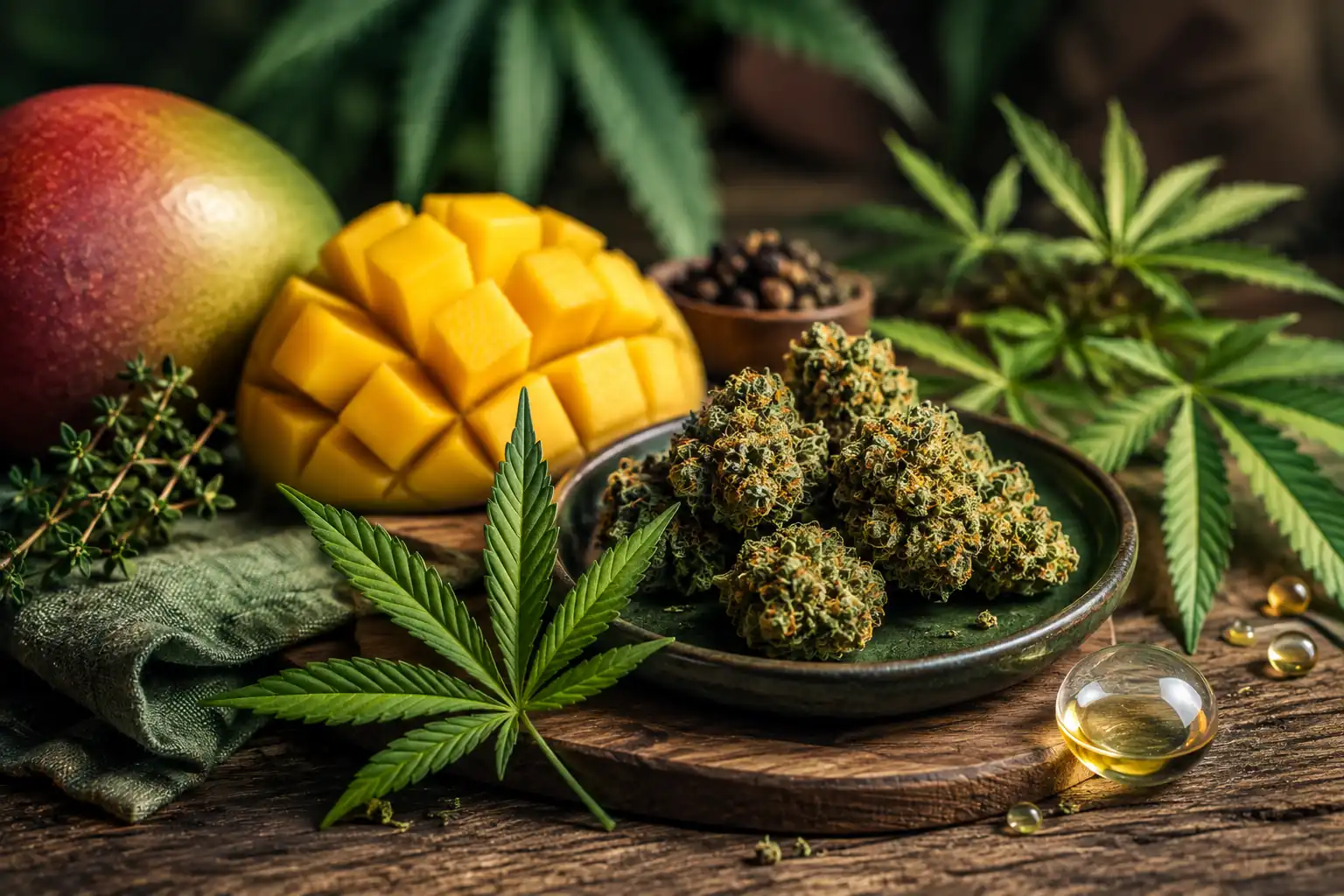
You’ll find it in hops (which is why some beers carry a similar earthy note), lemongrass, thyme, bay leaf, and even in the flesh of a ripe mango, and it’s widely considered the predominant terpene found in modern North American cannabis cultivars. Its aroma profile is often described as earthy, musky, sweet, and herbal, with a faint clove-like spice underneath.
This guide breaks down what myrcene actually does in the body, what the peer reviewed research says about beta myrcene terpene effects, which strains tend to run high in it, and how to consume it in a way that preserves rather than destroys it. We’ll also tackle two of the most repeated claims in cannabis culture: the couch lock myth and the mango myth, both explained through actual chemistry rather than internet lore.
Understanding Beta Myrcene Terpene Effects (Mechanism and Science)
Most of the myrcene found in cannabis exists as the beta isomer, which is why you’ll frequently see it labeled “beta myrcene” on lab reports and in scientific literature. Understanding beta myrcene terpene effects requires looking past the “it makes you sleepy” stereotype and into the actual receptor level activity researchers have documented.
How Myrcene Interacts With the Body
Research suggests that myrcene may affect the nervous system, inflammation, pain, and muscle relaxation. However, most evidence comes from animal studies, while human research is still limited.
Muscle relaxation and sedation.
Animal studies suggest that myrcene may reduce movement, promote relaxation, and increase sleep. Research in mice and zebrafish has also found sedative and anxiety-reducing effects.
Anti inflammatory and analgesic responses.
Studies in animals show that myrcene may help reduce pain and inflammation. Some research suggests these effects may involve the body’s endocannabinoid system.
The GABA connection.
Researchers also believe myrcene may interact with GABA A receptors, which help regulate relaxation and sleep. This may help explain the calming and heavy body sensation often associated with myrcene rich products.
Important: Most of this evidence is preclinical, so more human studies are needed before firm health claims can be made.
Blood Brain Barrier and Absorption: Fact Versus Folklore
Myrcene is often claimed to “open the blood brain barrier” and make THC work faster. However, this has not been proven in controlled human studies.
What is better supported is that myrcene is lipophilic, meaning it can help certain compounds pass through skin and cell membranes. While this may support absorption in some topical products, there is not enough evidence to show that myrcene makes smoked or vaped cannabinoids act faster or stronger.
Couch Lock Versus Low Dose Focus
“Couch lock” refers to the heavy, relaxed feeling that makes you want to stay still. Myrcene is often linked to this effect.
Animal studies showing reduced movement and increased sleep provide some support for this idea.
However, the effect varies from person to person. Dose, tolerance, body chemistry, cannabinoids, and other terpenes can all influence the experience.
At lower doses, myrcene may feel calming without causing strong sedation. Higher doses may be more likely to create the classic “sink into the couch” feeling.
The Entourage Effect and the Mango Myth
What the Entourage Effect Actually Means
The entourage effect is the theory that cannabinoids and terpenes work together to influence their overall effects.
Myrcene may interact with compounds such as pinene and linalool, potentially shaping the experience of different cannabis varieties.
However, research is still developing. While early studies support possible cannabinoid and terpene interactions, large human clinical trials are limited.
Separating Fact From Myth: Does Eating a Mango Really Boost Your High?
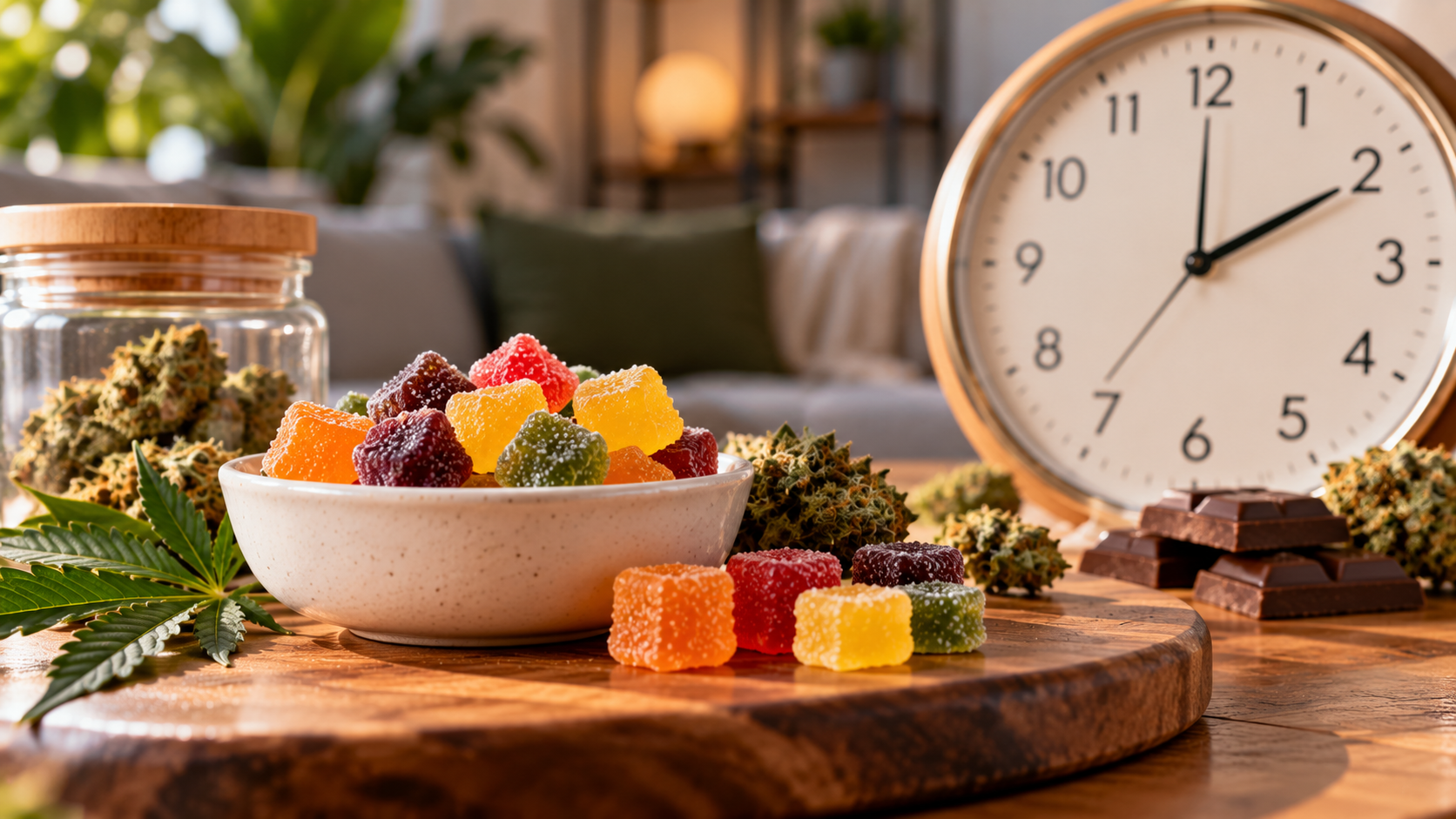
The idea that eating a ripe mango before consuming cannabis can make the effects stronger or last longer is a popular cannabis myth.
Mangoes do contain myrcene, but the amount can vary depending on the fruit, variety, and ripeness. The levels are also much lower than those typically found in cannabis flower or concentrates.
There is currently no controlled human research proving that eating mango changes the intensity, duration, or overall effects of cannabis.
Top High Myrcene Terpene Strains
Myrcene percentage varies significantly by grower, harvest, curing method, and even storage conditions, so treat the numbers below as general reference ranges reported across cultivators and lab databases rather than guarantees for any specific batch.
| Strain | Typical Myrcene Range | Notable Secondary Terpenes | Commonly Reported Effects |
| Blue Dream | 0.3% to 0.6% | Pinene, Caryophyllene | Balanced, calm alertness, mild relaxation |
| OG Kush | 0.4% to 1.0% | Limonene, Caryophyllene | Heavy body relaxation, euphoria |
| Harlequin | 0.2% to 0.5% | Pinene, Caryophyllene | Clear headed calm, commonly used for CBD forward relief |
| Granddaddy Purple | 0.5% to 1.2% | Linalool, Caryophyllene | Strong sedation, muscle relaxation |
| Northern Lights | 0.4% to 0.9% | Caryophyllene, Limonene | Deep relaxation, sleep support |
| Grape Stomper | 0.5% to 1.1% | Limonene, Pinene | Heavy relaxation with mood lift |
Why “Indica” and “Sativa” Labels Fall Short
The indica vs. sativa labels were originally based on plant characteristics, not specific effects. Today, extensive crossbreeding means two products with the same label can have very different cannabinoid and terpene profiles.
A better way to understand a product is its chemovar profile, which includes cannabinoids such as THC, CBD, and CBG, along with its terpene content. These compounds can play a bigger role in shaping the overall experience.
The Certificate of Analysis (COA) is one of the best tools for checking this information. It provides third party lab results showing the cannabinoid and terpene levels for a specific batch
Optimal Consumption Methods for Myrcene
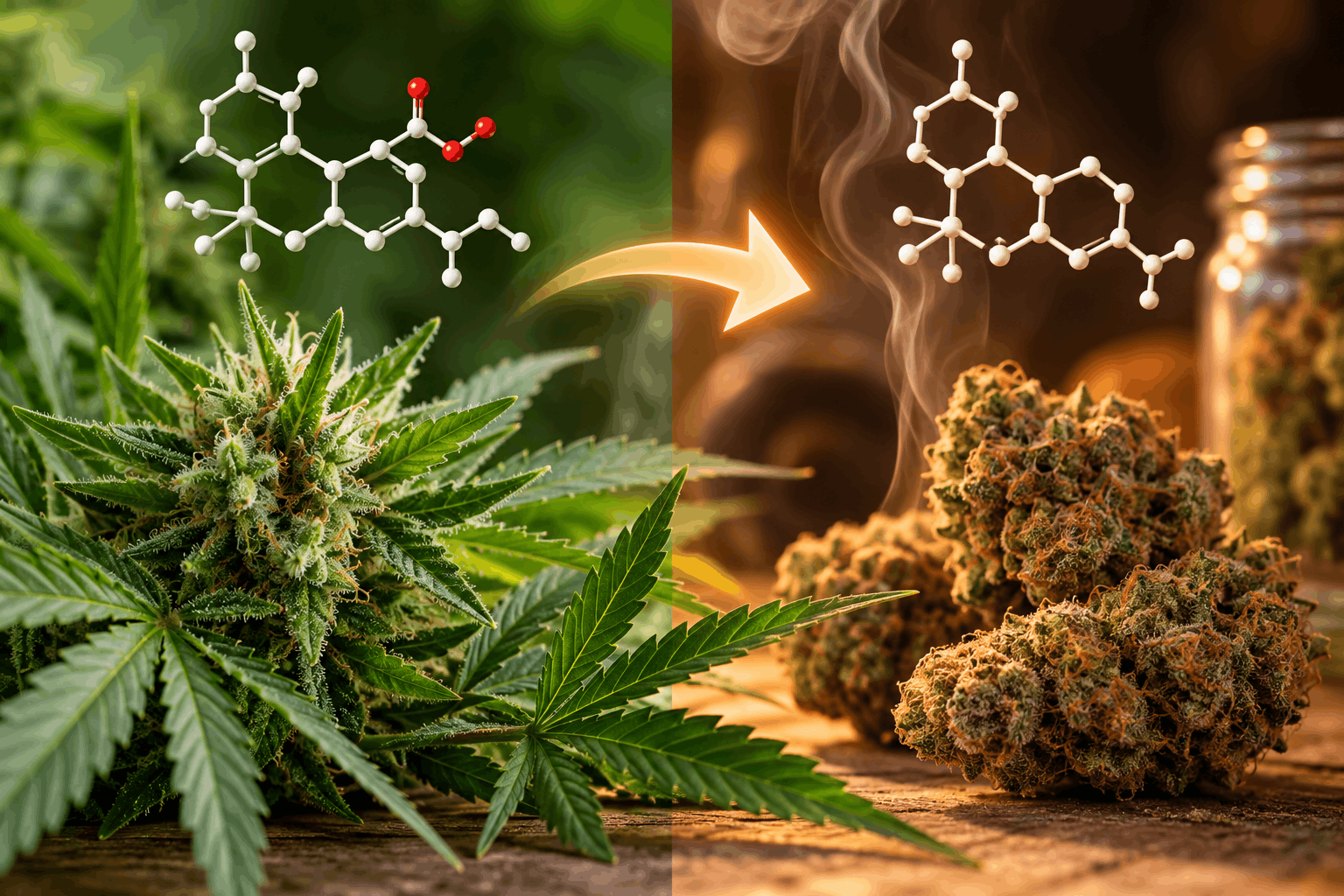
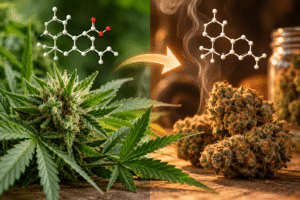
Because myrcene has a relatively low boiling point among cannabis terpenes, roughly 166 to 168 degrees Celsius (about 331 to 334 degrees Fahrenheit), the method you choose to consume cannabis has a real impact on how much of it survives to reach your body.
| Method | Approximate Temperature | Effect on Myrcene | Bioavailability Notes |
| Smoking (combustion) | 600°C+ | Largely destroyed or converted into combustion byproducts | Fast onset, but significant terpene loss and added particulate exposure |
| Low temperature vaping | 157°C to 190°C | Best preservation of myrcene and other terpenes | Fast onset, cleaner terpene profile, dose control possible |
| Tinctures (sublingual) | No heat applied | Terpenes largely intact if properly extracted | Moderate onset, avoids inhalation entirely |
| Edibles | Varies during infusion process, often 100°C to 120°C | Partial loss depending on infusion time and temperature | Slow onset, but terpenes that survive are absorbed through digestion |
Low-temperature vaping, generally in the range just below and around myrcene’s boiling point, tends to preserve the widest range of terpenes intact, which is why many consumers who are specifically chasing a particular terpene’s effects gravitate toward adjustable temperature vaporizers. Combustion via smoking generates temperatures many times higher than needed to vaporize terpenes, meaning a meaningful portion of the original terpene profile is altered or destroyed before it ever reaches your lungs. Tinctures and properly formulated edibles can preserve terpenes well if manufacturers use lower temperature extraction and infusion methods, though this varies significantly by brand and process.
Frequently Asked Questions
Is myrcene safe to consume?
Myrcene naturally occurs in foods and plants such as mango, thyme, lemongrass, and hops. It has also been used as a flavoring and fragrance ingredient.
Its regulatory status is more complicated. In 2018, the FDA removed authorization for synthetic beta myrcene as an added food flavoring based on legal requirements related to animal cancer findings. This did not mean that naturally occurring myrcene in foods was declared unsafe.
California’s Prop 65 rules also include certain terpene related compounds and can require warning labels on some products.
Does myrcene make you feel high on its own?
No. Myrcene is not intoxicating and does not create a psychoactive high like THC. Instead, it may influence feelings of relaxation or sedation when combined with cannabinoids.
What temperature burns off myrcene?
Myrcene has a boiling point of about 166–168°C (331–334°F). Smoking temperatures are much higher, which can cause myrcene to break down or evaporate. Vaporizing near its boiling point may help preserve more of it.
How do I know if a strain is high in myrcene?
Check the product’s Certificate of Analysis (COA). It provides the actual terpene percentages for that specific batch and is more reliable than strain names or indica/sativa labels.
Final Thoughts
Myrcene has earned its reputation as one of cannabis’s most discussed terpenes, but the science is more nuanced than the common online myths. Research suggests that myrcene may influence pain, inflammation, and relaxation while working alongside cannabinoids rather than producing a high on its own.
For consumers, it is better to look beyond strain names and folklore. Checking the Certificate of Analysis (COA) can provide a clearer picture of a product’s cannabinoid and terpene profile. For shoppers exploring terpene rich wellness products, Natural Buds can be a helpful place to learn more about product options and their available information.