You bought a premium hemp product. It smelled incredible, felt sticky and fresh, and worked exactly the way you hoped. Three weeks later, it’s dry, harsh on the throat, and barely does anything at all.
That’s not bad luck, and it’s not a defective batch. It’s chemistry.
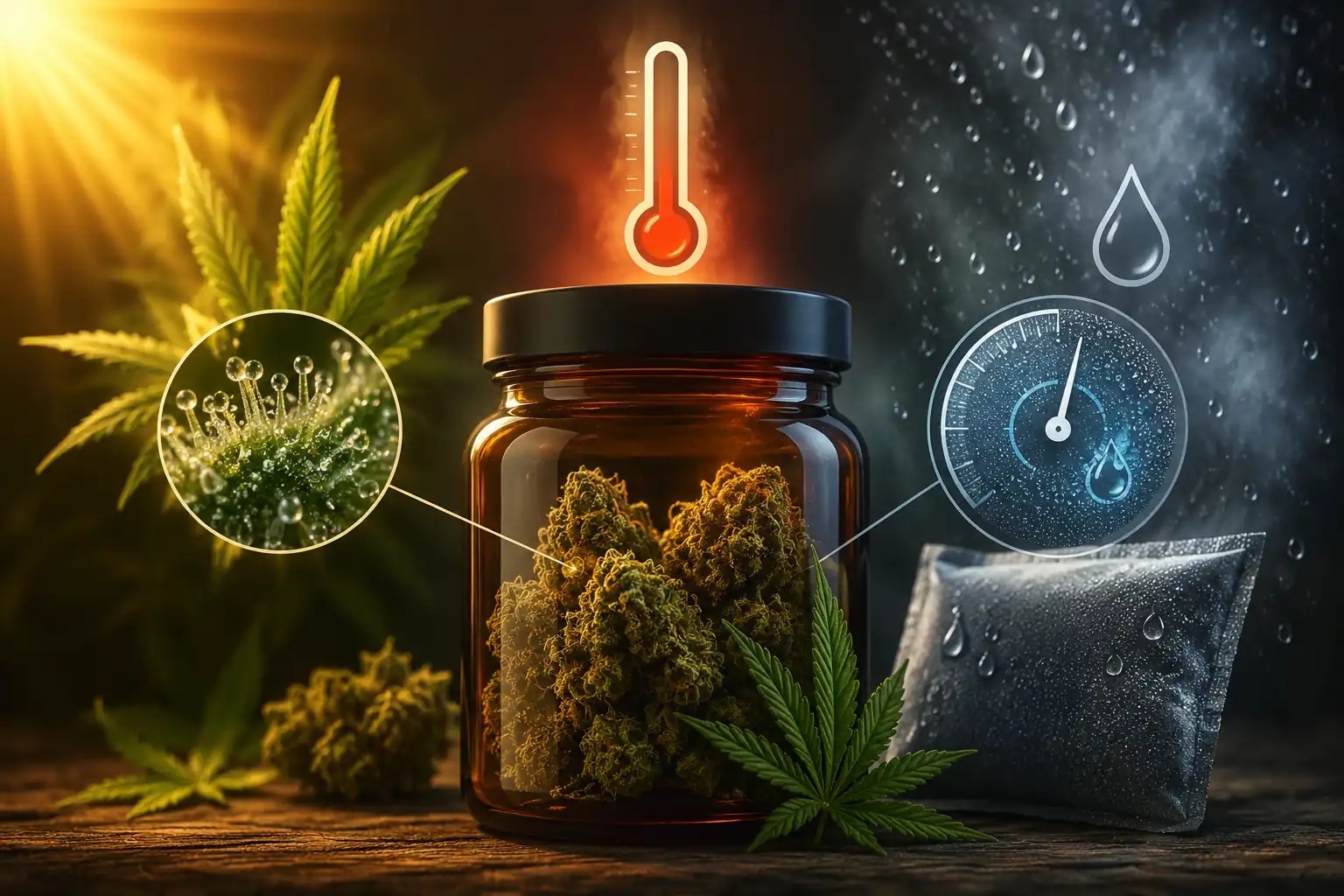
Hemp products are living, breathing compounds sitting inside a jar or package, and three environmental forces quietly determine how long they stay potent: light, temperature, and humidity. Get those three factors right, and your product can hold most of its strength for months. Get them wrong, and you can lose meaningful potency in a matter of weeks.
This guide breaks down exactly what’s happening at a molecular level, and more importantly, what you can do about it starting today.
Key Takeaways
- Light: UV exposure converts THC and CBD into CBN, a less potent, more sedating compound. Store in amber or opaque containers, away from windows.
- Temperature: Keep hemp products between 60°F and 70°F (15°C to 21°C). Above 77°F (25°C), degradation speeds up and mold risk rises.
- Humidity: Maintain 55% to 62% relative humidity (RH). Below that range, terpenes evaporate and flower turns brittle. Above 65% RH, mold becomes a real threat.
- Air exposure: Every time a container opens, oxygen and moisture rush in, so minimize handling and reseal quickly.
- The stakes are real: products stored above 86°F (30°C) can lose more than 14% of their active cannabinoid potential within just 90 days.
How Light Affects Hemp Product Quality
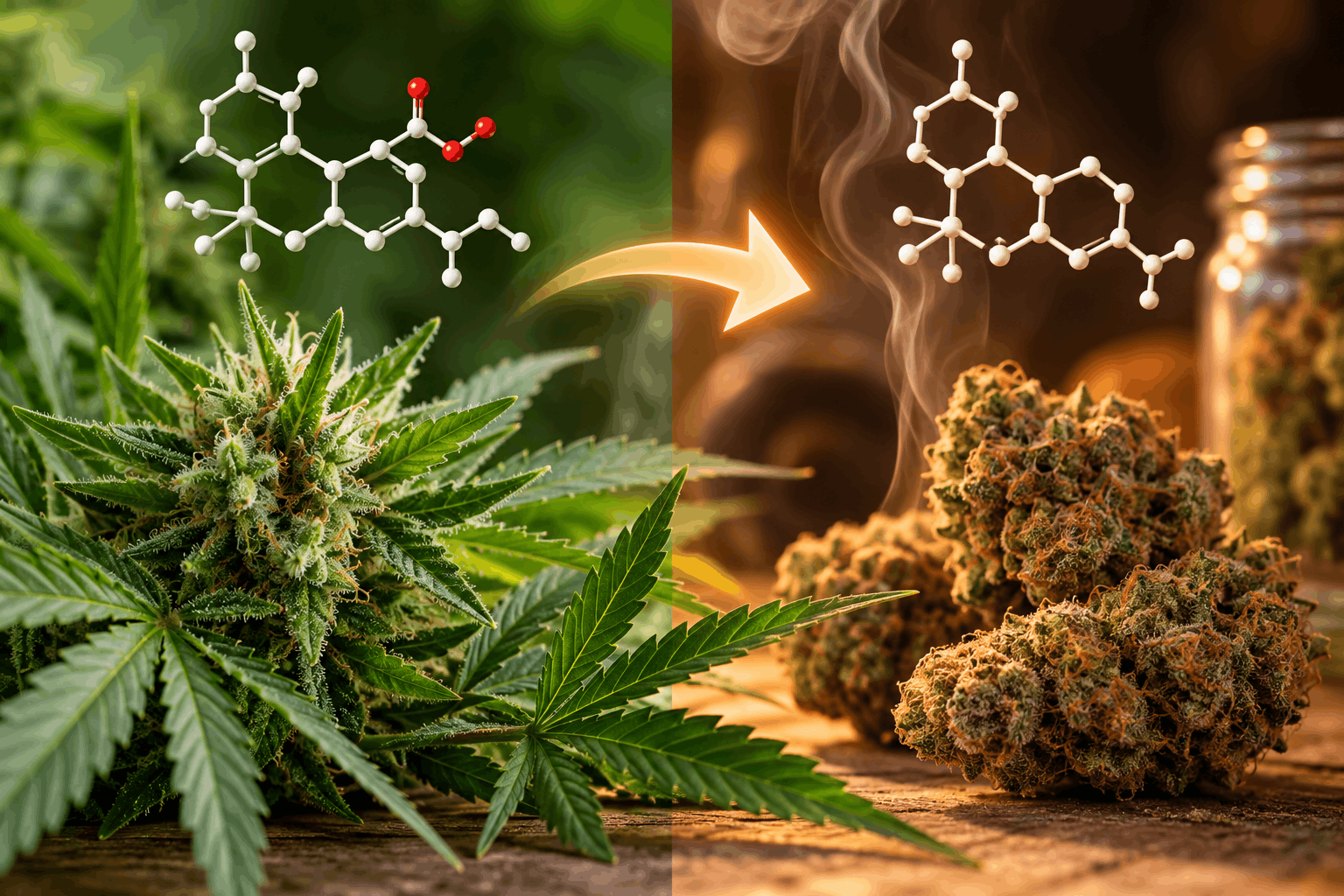
Direct answer: Light, especially ultraviolet (UV) light, breaks down cannabinoids and terpenes through a process called photodegradation. UV rays convert THC and CBD into CBN (cannabinol), a compound associated with weaker, more sedative effects and a noticeably duller aroma. Even a few hours of direct sun exposure can measurably reduce potency.
Think of light as a slow, invisible eraser working on your hemp product every second it sits exposed. It doesn’t announce itself. There’s no smell of burning or obvious sign of damage happening in real time, but the chemical structure underneath is quietly changing.
What’s actually happening chemically:
UV photons carry enough energy to break the molecular bonds holding cannabinoids together. When that happens to THC or CBD, the molecule doesn’t just disappear. It converts into CBN, a byproduct that:
- Offers a fraction of the potency of the original compound
- Tends to produce more sedating, “foggy” effects rather than the clarity users expect
- Signals that oxidation and aging have already begun
Terpenes, the aromatic oils responsible for flavor and scent, are even more fragile than cannabinoids. They’re volatile by nature, meaning they evaporate and break down faster under light and heat exposure. That’s why a product that once smelled vibrant and citrusy can go flat and grassy within weeks of poor storage.
Signs your product has already suffered light damage:
- Faded or dulled color, especially in flower (bright greens turn brownish or gray)
- Loss of a distinct, pronounced aroma
- A dry, brittle, crumbly texture instead of a slightly sticky, resinous feel
- A harsher, less flavorful experience when used
How to prevent light damage:
- Store products in amber or cobalt blue glass jars. These glass tints block a significant portion of the UV spectrum while still letting you see contents.
- Use opaque, UV blocking bags or containers for anything that isn’t glass.
- Keep containers inside a dark cabinet, drawer, or closet, never on an open shelf or windowsill.
- Avoid clear plastic packaging for long term storage, even if it’s convenient short term.
The Critical Role of Temperature in Preserving Freshness
Direct answer: The ideal storage temperature for hemp products is 60°F to 70°F (15°C to 21°C). Once temperatures climb above 77°F (25°C), chemical degradation accelerates and mold risk increases significantly. Products stored above 86°F (30°C) can lose over 14% of active cannabinoid potential within 90 days.
Heat acts like an accelerant on every reaction already happening inside your hemp product. Cannabinoids and terpenes are chemically unstable to begin with, and warmth simply speeds up the clock on that instability.
Why heat is so damaging:
Elevated temperatures increase molecular movement, which means cannabinoid and terpene molecules break down and evaporate faster. This isn’t a gradual, linear process either. Once you cross certain thresholds, degradation compounds quickly:
Temperature Range Effect on Hemp Products
60°F to 70°F (15°C to 21°C)Ideal Cannabinoids and terpenes remain stable
70°F to 77°F (21°C to 25°C) Acceptable short term, but gradual terpene loss begins
Above 77°F (25°C) Degradation speeds up noticeably. Mold risk rises,
especially when paired with humidity
Above 86°F (30°C) Significant damage. Over 14% loss of active cannabinoid
potential possible within 90 days
Common heat mistakes people make:
- Storing products near a stove, oven, or other kitchen heat source
- Leaving containers on a windowsill where sunlight compounds the heat problem
- Keeping products in a car, especially during warmer months, even for short errands
- Storing near electronics or appliances that generate ambient warmth (routers, chargers, lamps)
What about the refrigerator or freezer?
Cold storage isn’t automatically better. Refrigerators introduce humidity swings every time the door opens, and that fluctuating moisture can be just as damaging as heat. Freezing can also make trichomes (the resinous glands that hold cannabinoids and terpenes) brittle, causing them to snap off and fall away entirely.
The safest bet is a stable, room temperature environment between 60°F and 70°F, away from appliances, sunlight, and drafts.
In summary, consistent moderate temperature matters more than extreme cold. A steady 60°F to 70°F range protects potency far better than a cycle of freezing and thawing.
Humidity Control and Finding the Perfect Balance
Direct answer: The ideal relative humidity (RH) range for hemp storage is 55% to 62%. Below 55% RH, trichomes dry out and terpenes evaporate, leaving a brittle, flavorless product. Above 65% RH, moisture creates the perfect environment for mold spores to grow, posing both a quality and safety risk.
Humidity is the trickiest of the three factors because both extremes cause real damage, just in opposite directions. Too dry, and you lose flavor and potency. Too wet, and you risk mold, which can make a product unsafe to use entirely.
The double risk explained:
Low humidity (below 55% RH):
- Trichomes become dry and fragile, breaking off during handling
- Terpenes evaporate rapidly, stripping away aroma and flavor
- Flower crumbles into powder rather than breaking apart cleanly
- Effects become noticeably weaker over time
High humidity (above 65% RH):
- Mold spores, which exist almost everywhere in ambient air, find the moisture they need to multiply
- Mold growth can happen within days under the right warm, damp conditions
- Products can develop a musty, off putting smell
- Consuming moldy hemp products poses genuine health risks, particularly for anyone with respiratory sensitivities
Tools that actually solve this problem:
- Two way humidity control packs: These small packets (often placed directly in storage containers) absorb excess moisture or release it as needed, automatically maintaining that 55% to 62% RH sweet spot.
- Airtight seal technology: Glass jars with rubber gasket lids or vacuum sealed bags prevent outside air (and its unpredictable humidity) from constantly cycling in and out.
- A basic hygrometer: A small, inexpensive humidity gauge lets you monitor conditions inside your storage container rather than guessing.
Storage Best Practices for Long Term Product Quality
Direct answer: Proper long term storage combines the right container, the right location, and minimal handling. Airtight glass containers kept in cool, dark, dry spots, paired with limited air exposure, preserve potency, flavor, and safety far longer than casual storage methods.
Here’s a straightforward, step by step approach you can put into practice today.
Step 1: Choose the right container
- Airtight glass jars (ideally amber or cobalt tinted) are the gold standard. Glass doesn’t leach chemicals, doesn’t hold onto odors from previous contents, and pairs well with humidity packs.
- Avoid cheap, thin plastic containers. Plastic can be slightly porous over time, allowing air exchange, and it often carries a static charge that pulls trichomes away from flower.
- If glass isn’t available, opt for food grade, UV resistant containers with a genuine airtight seal, not just a snap on lid.
Step 2: Get the placement right
- Choose a spot that’s consistently cool, dark, and dry: think a closet shelf, a dresser drawer, or a cabinet away from the kitchen or bathroom (both tend to have humidity swings).
- Avoid windowsills, garages, cars, and anywhere near heating vents or appliances.
- If you live somewhere with high ambient humidity, consider a dedicated storage box with silica gel packs or humidity control packs built in.
Step 3: Minimize handling and use batch portioning
- Every time a container opens, fresh air (with its own temperature and humidity) rushes in and displaces the stable environment you’ve built.
- Instead of opening one large container repeatedly throughout the week, portion out smaller amounts into a secondary, smaller airtight container for daily use.
- Keep your main supply sealed and undisturbed as much as possible.
- Use clean, dry hands or tools when handling product, since moisture from skin can introduce localized humidity spikes.
Summary Matrix Table
| EnvironmentalFactor | Ideal Condition | Risk of Improper Exposure | Solution |
| Light | Dark storage, minimal UV exposure | THC and CBD convert to CBN, reducing potency and altering effects | Amber or cobalt glass jars, opaque containers, dark cabinets |
| Temperature | 60°F to 70°F (15°C to 21°C) | Above 77°F (25°C): faster degradation and mold risk; above 86°F (30°C): over 14% potency loss in 90 days | Store at stable room temperature, away from heat sources and sunlight |
| Humidity | 55% to 62% RH | Below 55%: dry, brittle product and terpene loss; above 65%: mold growth | Two way humidity packs, airtight containers, hygrometer monitoring |
| Air Exposure | Minimal, infrequent opening | Oxidation, moisture fluctuation, faster overall degradation | Batch portioning, airtight seals, limited handling |
Also Read: How to Store Wellness Products to Keep Them Fresh and Effective
Frequently Asked Questions
Q1: What is the single biggest threat to hemp product freshness?
Light exposure is often the fastest acting threat, since UV rays begin converting THC and CBD into CBN almost immediately upon exposure. That said, temperature and humidity compound the damage over time, so all three factors matter together rather than in isolation.
Q2: Can you store hemp products in the refrigerator or freezer?
It’s generally not recommended. Refrigerators introduce frequent humidity fluctuations every time the door opens, and freezing can make trichomes brittle, causing them to break off. A stable room temperature environment between 60°F and 70°F is a safer, more consistent choice.
Q3: How do you know if your hemp product has gone bad from humidity?
Signs of low humidity damage include a dry, crumbly texture and faded aroma. Signs of high humidity damage include a musty smell, visible spotting, or a soft, damp texture, all of which suggest mold and mean the product should be discarded rather than used.
Q4: Why is amber glass better than clear glass for storing hemp?
Amber (and cobalt blue) glass blocks a significant portion of the UV light spectrum that causes photodegradation, while clear glass offers essentially no protection. The tint acts like sunglasses for your product, letting you see what’s inside while filtering out the wavelengths that cause the most damage.