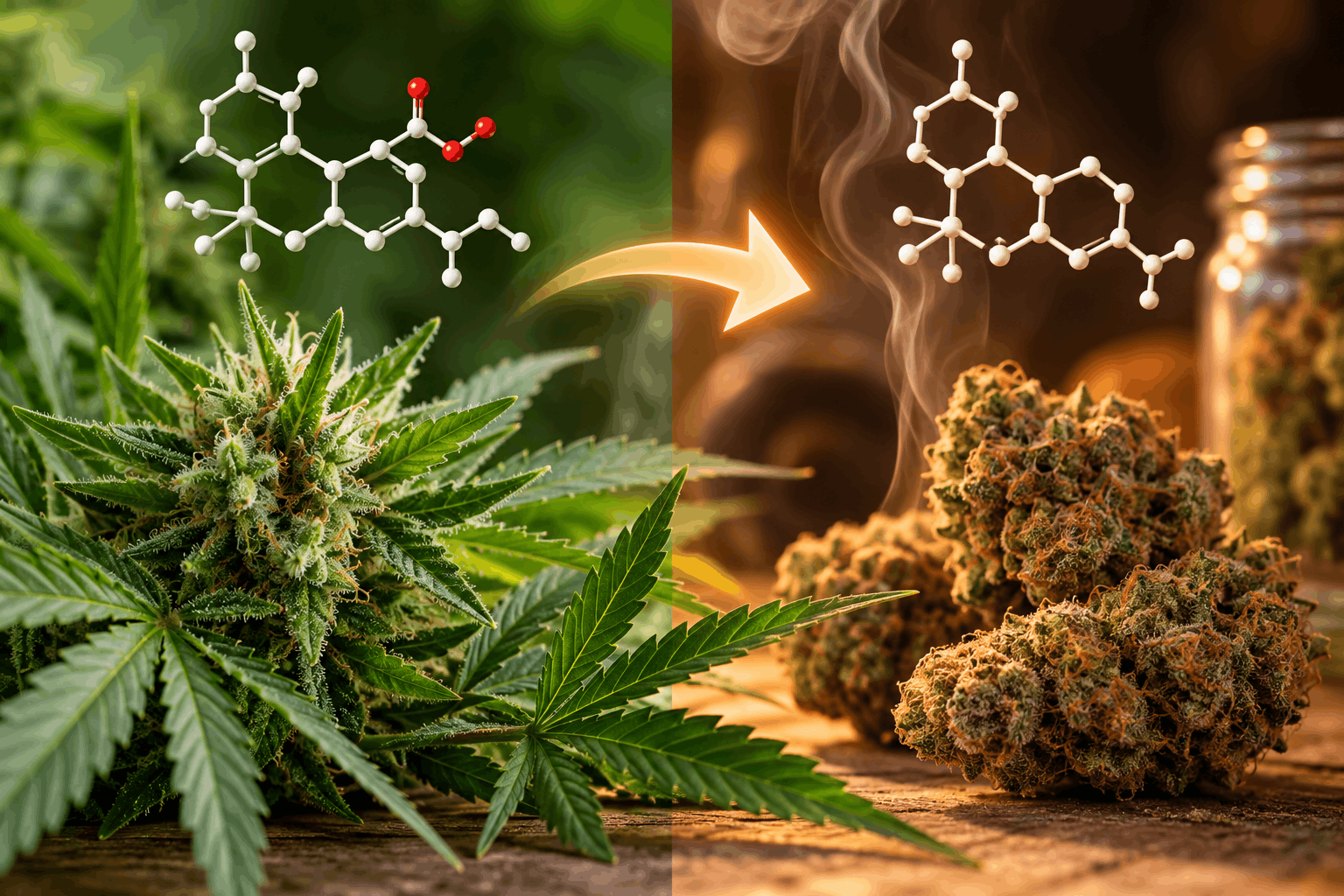
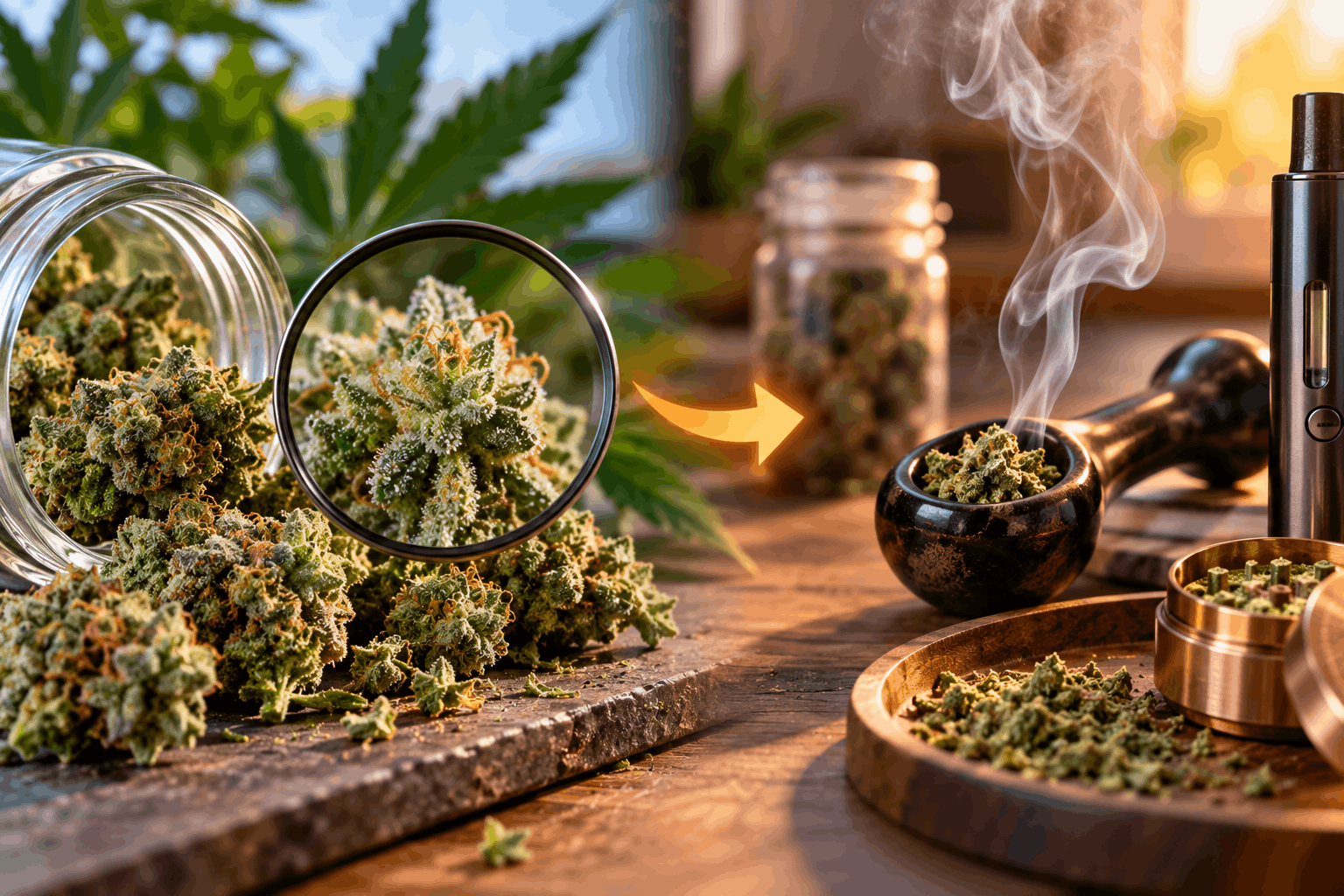
If you are wondering whether THCa flower gets you high, the key detail is whether the flower is heated. THCa, or tetrahydrocannabinolic acid, is a naturally occurring precursor to THC and is generally described as non-intoxicating in its unheated form. When THCa flower is exposed to enough heat, a chemical process called decarboxylation converts much of the THCa into delta-9 THC, the cannabinoid primarily responsible for the intoxicating effects associated with cannabis.
The exact conversion depends on the conditions. Scientific reviews note that temperature and heating duration affect decarboxylation and that excessive heat can also degrade cannabinoids.
THCa products can also raise questions about the difference between hemp and marijuana under federal and state rules. Our hemp vs. cannabis guide explains how these terms differ and why cannabinoid content and legal definitions matter.
This is also why cannabis laboratory reports may list THCa and delta-9 THC separately.
TL;DR: Key takeaways
- Raw, unheated THCa is not considered intoxicating in the same way as delta-9 THC.
- Heat from smoking, vaping, or other thermal processing converts THCa into THC through decarboxylation.
- The conversion isn’t always 100%, and the amount converted depends on temperature, time, and other conditions.
Does THCa Flower Get You High When Heated?
Yes. If the question is whether THCa flower gets you high after heating, the answer is that it can produce intoxicating effects because heat converts THCa into delta-9 THC. THCa and THC are related cannabinoids, but they are not chemically identical. THCa contains an additional carboxyl group. During decarboxylation, heat releases this group, producing the neutral cannabinoid THC. Research describes THCa as a precursor to THC and confirms that heating, including smoking, can cause this conversion. That distinction explains why the same flower can behave differently depending on how it is used.| Form | What Happens to THCa? | Intoxicating THC Effect |
| Raw, unheated flower | Much of the THCa remains in acidic form | Not expected to produce the typical THC high |
| Smoked flower | Heat rapidly converts part of the THCa to THC | Yes |
| Vaporized flower | Heat promotes decarboxylation | Yes |
| Heated flower | THCa progressively converts to THC | Can become intoxicating |
What Is THCa Flower?
If you want a deeper introduction to the product itself, our guide to what THCa flower is and its legal status explains how THCa flower is defined and the rules consumers should understand. Fresh cannabis generally contains much more THCa than active delta-9 THC. One published study describes THCa-A as the non-psychoactive precursor of delta-9 THC and notes that heating cannabis through smoking or baking causes conversion to THC. THCa is only one part of the plant’s broader cannabinoid profile, so you can also explore our guide to minor cannabinoids and their roles to learn how different cannabis compounds relate to one another.What Happens to THCa When You Heat It?
Heating THCa triggers decarboxylation. During this reaction, THCa loses a carboxyl group as carbon dioxide and becomes THC. Heat is a major driver of the reaction, although light and prolonged storage can also contribute to cannabinoid changes over time. The basic process is:- Cannabis flower initially contains THCa.
- Heat supplies energy for decarboxylation.
- THCa loses carbon dioxide.
- The chemical structure changes into delta-9 THC.
- THC can then produce intoxicating effects when consumed in sufficient amounts.
Why Can Heated THCa Flower Feel Like THC Flower?
People sometimes assume THCa flower and THC flower must produce completely different experiences. Chemically, however, heating changes that comparison. When someone smokes or vaporizes THCa-rich flower, the high temperature rapidly decarboxylates a portion of the THCa. The resulting THC can enter the body and produce the familiar intoxicating effects associated with cannabis. Research examining cannabis smoking and vaporization has specifically studied THCa decarboxylation during these processes. So, does THCa get you high when the product is smoked? More precisely, the heat converts THCa into THC, and that newly formed THC is what produces the intoxicating effect.Does Raw THCa Produce the Same High?
Raw THCa is not expected to create the same classic intoxicating high as heated THC. Research literature commonly describes THCa-A as non-psychoactive or non-intoxicating compared with delta-9 THC. However, it is important not to treat raw cannabis flower as chemically static. Drying, storage, light, heat, and humidity can affect cannabis and hemp products over time. Our guide to how light, heat, and humidity affect hemp quality explains why proper storage conditions matter. The amount of THC already present can also differ from one product to another. If you need to know exactly what a flower contains, check its current laboratory results rather than relying only on a product name.Does All THCa Turn Into THC When Heated?
No. You should not assume that every milligram of THCa becomes a milligram of THC. Laboratory research shows that conversion efficiency depends on factors such as:- Temperature
- Heating time
- Starting cannabinoid composition
- Moisture and plant material
- Oxygen exposure
- Heating method
How Is THCa Different From Delta-9 THC?
The simplest difference is that THCa is the acidic precursor from which delta-9 THC can form.| THCa | Delta-9 THC |
| Naturally abundant in fresh cannabis | Usually present at lower levels in fresh plant material |
| Acidic cannabinoid | Neutral cannabinoid |
| Generally considered non-intoxicating before conversion | Intoxicating |
| Converts toward THC with heat | Already in active THC form |
| Chemical name: tetrahydrocannabinolic acid | Chemical name: delta-9-tetrahydrocannabinol |
Can THCa Flower Affect a Drug Test?
It can. Once THCa flower is heated and THC is consumed, the body metabolizes THC into compounds that cannabis drug tests may detect. Standard urine testing commonly targets the THC metabolite 11-nor-9-carboxy-THC rather than measuring whether the original product was marketed as THCa flower. If you are subject to workplace, athletic, probation, or other drug testing, you should not assume a THCa-labeled product will prevent a positive cannabis result.Is THCa Flower Legal Everywhere?
No. The legal status is complicated and is changing. Historically, the federal hemp definition focused on a limit of 0.3% delta-9 THC by dry weight. However, federal legislation enacted in November 2025 changes the statutory hemp definition to use total THC, including THCa, with the revised definition scheduled to take effect one year after enactment. State laws can also impose separate or stricter restrictions. Because federal and state rules are evolving, consumers and businesses should check current laws where they live rather than assuming that a THCa product is legal simply because it is labeled hemp.What Should You Check Before Choosing THCa Flower?
A product label should not be your only source of information. When available, review the product’s certificate of analysis or laboratory report. Pay attention to:- THCa content
- Delta-9 THC content
- Total cannabinoid information
- Testing date
- Batch or lot number
- Contaminant testing
- Laboratory information